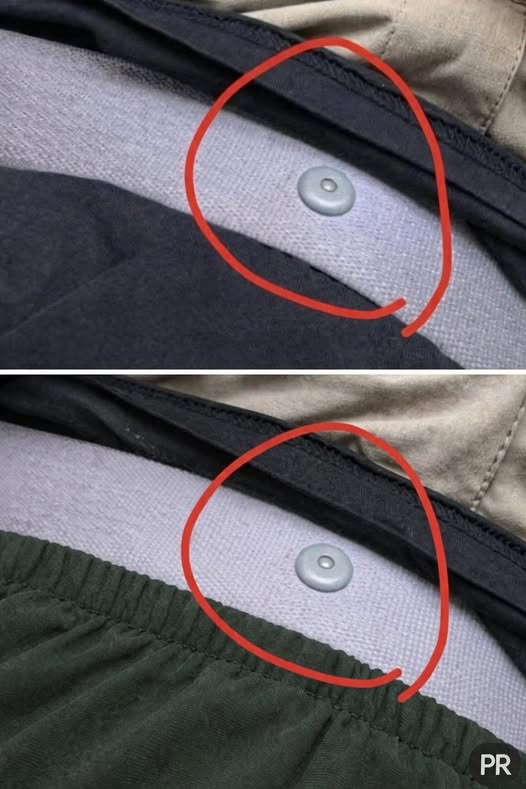
In today’s modern world, safety in vehicles is often associated with advanced and complex systems—airbags that deploy within milliseconds, reinforced steel structures, and intelligent sensors capable of predicting collisions before the driver even reacts. Yet inside every car there is a piece of engineering we use every day without thinking about it. The seat belt remains the most essential and effective safety device ever created for road travel. While most people understand its main components—the webbing strap, the retractor mechanism, and the buckle—there is a small detail that often raises curiosity. It’s a tiny round plastic piece commonly called the “stopper.” Although it might look like a simple decorative part or a minor production feature, it actually plays an important functional role in passenger safety.
To understand why this small component matters, it helps to look at the physics of a vehicle collision. When a car suddenly stops, the bodies inside continue moving forward at the same speed because of inertia. The seat belt’s purpose is to counter that motion, securing the passenger to the vehicle’s structure and spreading the force of impact across the strongest parts of the body—mainly the pelvis and rib cage. For this to work correctly, the belt must sit in the proper position. If the strap rides too high across the neck or slides off the shoulder, the consequences in a serious crash could be dangerous. This is where the small button becomes important. Its main function is to keep the latch plate—the metal piece inserted into the buckle—at a fixed, reachable position along the belt when it isn’t being used.
The button acts as a physical stop, preventing the latch plate from sliding down the webbing and disappearing into the gap between the seat and the door pillar. By holding the latch plate at a consistent and convenient height, the stopper allows drivers and passengers to grab and buckle the belt easily with one hand. This might sound like a small convenience, but it actually affects human behavior. Safety equipment that is easy and comfortable to use is far more likely to be used correctly. If the latch plate constantly drops to the floor and requires effort to retrieve, people may become frustrated or wear the belt improperly. The stopper ensures the belt stays ready in the correct position—crossing the collarbone and center of the chest, away from sensitive areas like the neck.
Beyond convenience, the stopper also contributes to how modern safety systems function. In many vehicles today, seat belts are integrated with advanced components like pretensioners and load limiters. Pretensioners are mechanisms that instantly tighten the belt during a collision to remove slack and pull the passenger firmly into the seat. For this system to work efficiently, the belt must already be aligned correctly before impact occurs. If the strap is twisted or shifted out of position, the pretensioning force may not distribute evenly. The small stopper helps maintain the correct “pre-crash” alignment of the belt so the system can perform exactly as engineers designed it.
The stopper also plays a role in comfort. Seat belt webbing must be strong enough to withstand thousands of pounds of force, yet soft enough to avoid irritating the skin during normal use. The angle at which the belt crosses the shoulder depends partly on the vehicle’s interior design. The stopper helps keep the strap vertically aligned so it doesn’t twist, bunch up, or shift awkwardly as it’s pulled across the body. A belt that stays flat across the shoulder reduces pressure points and makes long drives more comfortable. And a comfortable driver is naturally a safer one.
Despite its importance, this tiny component is often overlooked during vehicle maintenance. Because it is made from durable plastic, it is designed to last for many years. However, it can occasionally become loose, damaged, or fall off entirely. When the stopper is missing, the latch plate may slide all the way down to the floor. Drivers then have to reach down to retrieve it, often pulling the belt at the wrong angle. This small inconvenience can lead to the belt sitting incorrectly during a drive, sometimes riding too close to the neck. Safety experts warn that if the stopper becomes detached, it should not be replaced with makeshift solutions like pins or clips. Improvised fixes can damage the belt or create new risks in an accident. Instead, the seat belt assembly should be inspected and repaired with the proper manufacturer-approved component.
Even as vehicles move toward increasingly automated technology, the fundamental principles of occupant protection remain the same. No matter how advanced cars become, the three-point seat belt continues to be the foundation of passenger safety. That tiny round button is a reminder that in engineering, even the smallest detail can serve an essential purpose. It quietly ensures the belt stays positioned correctly, working together with airbags and other systems to protect the people inside the vehicle.
The next time you hear the familiar “click” of fastening your seat belt, take a moment to notice that small round button. It’s proof that vehicle safety is built from countless carefully designed details. Each component, no matter how small, plays a role in protecting human life when it matters most.