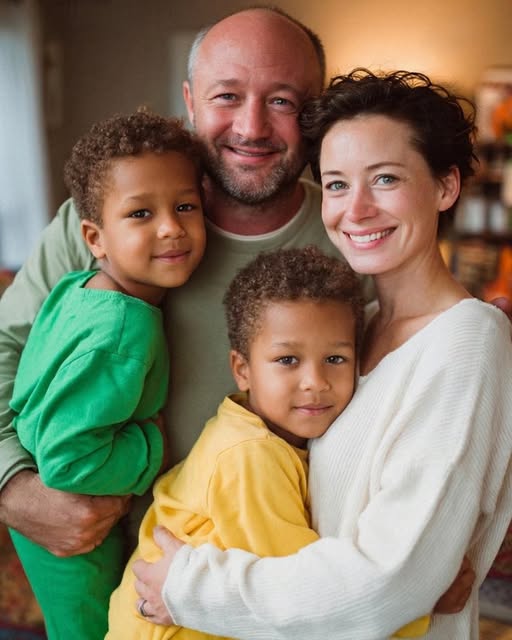
In the calm, steady rhythm of a ten-year marriage, silence can easily become a familiar companion. For a decade, my husband Joshua and I had built a life that was delicate but stable, grounded in the understanding that parenthood would never be part of our journey. In the early years we grieved that reality, but eventually we tucked the pain away beneath the predictable routines of work, hobbies, and quiet evenings. I focused on the structured certainty of my career, while Joshua found comfort in long fishing trips and peaceful afternoons spent in silence. We believed we had accepted our reality—until one Tuesday in March 2026 when everything shifted without warning.
It started at a neighborhood playground. Joshua suddenly stopped walking, his attention fixed on the laughter and movement of children climbing and running. His voice carried a hollow note when he asked if the emptiness in our lives still bothered me. Within days, that brief moment grew into something much larger. He began pushing for adoption with a determination I had never seen before. One morning he placed a brochure on the breakfast table, his voice filled with urgency. He said the house felt too quiet, that it wasn’t too late for us to become a family. When I hesitated—reminding him how demanding my career was—he didn’t simply ask for support. He asked for my full presence. He suggested I resign from my job so I could stay home and give us the best chance during the adoption process.
Moved by a vulnerability I interpreted as a late awakening of fatherhood, I agreed. I handed in my resignation, leaving behind the identity I had built at work in exchange for the hope of a shared future. Soon we were immersed in the complex world of forms, interviews, and home evaluations. Eventually, we were shown a photograph of four-year-old twins named Matthew and William. They looked small, cautious, and unsure. When we met them for the first time, Joshua knelt down to their level with such gentleness that it brought tears to my eyes. Before long, our quiet home filled with the lively chaos of LEGO towers, sticky pancake breakfasts, and laughter echoing through the rooms. For a few brief weeks, it felt as if we had rewritten our destiny.
But slowly, something began to change. Joshua started withdrawing. Late nights at the office became frequent, and private phone calls behind closed doors replaced the warm presence he once had. The man who had pleaded for this family suddenly seemed distant. The turning point came one Tuesday afternoon while the boys were asleep. As I passed his office, I heard his voice—strained and fragile.
“I can’t keep lying to her,” he whispered to someone on the phone. “I didn’t adopt the boys because I wanted a family with her… I just didn’t want her to be alone when I’m gone.”
The word gone didn’t mean leaving for a trip—it meant something final. When I heard him mention a timeline—maybe a year—the world around me seemed to tilt. Joshua hadn’t been planning a new beginning. He had been preparing for his own disappearance. He had been diagnosed with advanced lymphoma and had quietly arranged a future for me that he never expected to see. He had pressured me to quit my job and welcomed two vulnerable children into our lives so I wouldn’t face widowhood alone. It was an act of love hidden inside a devastating lie.
That night the betrayal felt sharper than the illness itself. I packed a bag and drove to my sister Caroline’s house, my thoughts tangled between grief and anger. Through the night I searched through his computer until I found the truth—medical reports and test results confirming everything. When I confronted him the next day at our kitchen table, the room was heavy with everything we hadn’t said. He insisted he was protecting me, but I saw the truth. He had tried to control my future without giving me the chance to choose it.
Even then, I didn’t leave him—though every instinct pushed me to. I stayed because two small boys who had already experienced abandonment could not lose another father because of a secret. I stayed because truth, even when painful, is the only foundation strong enough to build a life on. We stripped away the silence. We told our families the truth. We finalized the adoption. And I insisted he try an expensive experimental clinical trial he had previously refused.
The months that followed were filled with hospital visits, long hallways, and quiet waiting rooms. I watched the man who once tried to plan his own exit begin fighting to stay alive. The boys became the anchors he hadn’t expected. When Matthew simply asked him not to die, and William placed a toy in his hand “so he could play again later,” the idea of leaving suddenly became impossible.
Two years later, our home is no longer silent. The hallway floor is permanently covered with backpacks, toys, and the noise of growing boys. Joshua is now in remission—something he calls a miracle.
He often says my courage saved him.
But I know the truth.
Courage isn’t protecting someone from painful reality.
Courage is facing that truth together while there is still time to change the outcome.
Joshua believed he was giving me a family so I wouldn’t be alone in the future. In the end, he learned something different. A family isn’t a safety net built for someone else—it’s a bridge two people build together, step by step, grounded in honesty rather than fear.
We almost lost everything because of a lie meant to protect.
Instead, we found something real.
Our life now isn’t perfect or carefully scripted.
It’s loud, messy, and completely honest.
And most importantly—we’re both still here to live it.