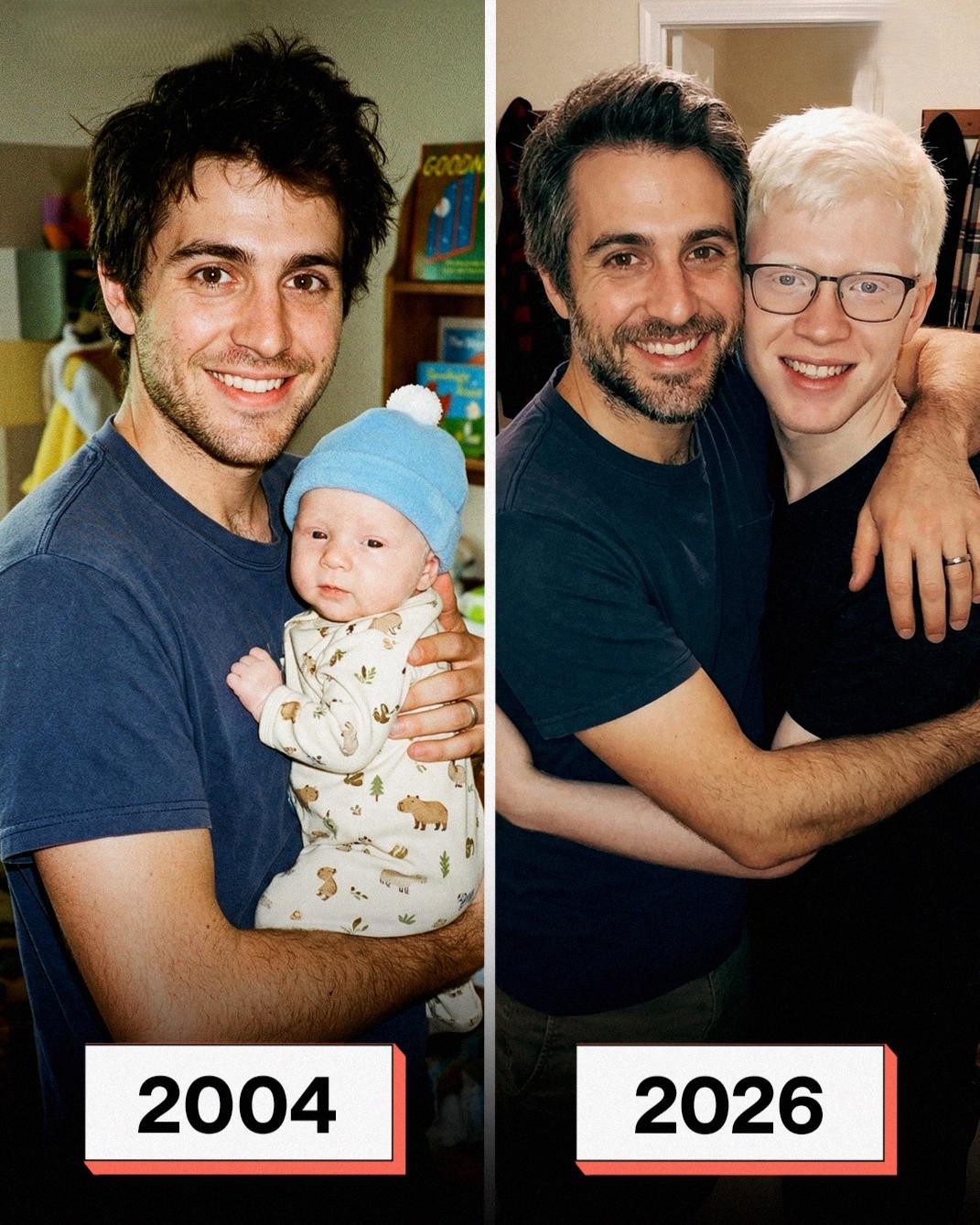
When my estranged mother returned after more than twenty years, she didn’t come back with remorse or nostalgia.
She arrived carrying documents.
My name is Dylan, and my life has never been straightforward. My parents were barely more than teenagers when I came into the world. Whatever relationship they once had couldn’t withstand the pressure of responsibility—especially the responsibility of raising me.
On the day I was born, my father hurried to the hospital expecting to begin a life with both of us.
Instead, my mother placed a newborn in his arms and walked away. <blockquote> “I’m not interested in raising a child, Greg. I don’t want him. You can handle it.” </blockquote>
That was the end of it. No support. No phone calls. No birthday wishes. Just a silence that lasted so long it almost felt like its own presence.
My father raised me by himself.
He did everything—worked several jobs, cooked meals, cleaned the house, and showed up for every scraped knee and every late-night problem. And somehow, through all of it, he never spoke badly about her.
When I was seven, I asked what she looked like. Without hesitation, he handed me a faded photograph and said gently: <blockquote> “She’s your mom, Dyl. Of course you should know her face.” </blockquote>
I asked him if he hated her. <blockquote> “No,” he replied. “I just love you more than I hate what she did.” </blockquote>
That sentence shaped the person I became more than anything else.
We didn’t have much growing up, but we had each other—and that was enough. By the time I was ten, I tried to help carry the load—cooking meals, cleaning the house, doing whatever I could to make things easier for the man who never once made me feel like I was a burden.
At twenty-one, I built something of my own.
LaunchPad started as a simple idea—helping young creators connect with mentors and funding. Within a year, it began to grow rapidly. Suddenly, people were paying attention. Listening to me. Believing in something I had created from the ground up.
And during quiet moments, a question started lingering in the back of my mind:
Would she care now?
I didn’t have to wonder for long.
One Saturday morning, my father called me to the front door. His voice carried something unusual—careful, cautious.
“Dyl… someone’s here.”
Then he said her name.
Jessica.
She stood on the porch like a stranger who already knew how the conversation would end. Older. Sharper. Untouched by the kind of emotion I had imagined all my life.
She didn’t cry. She didn’t apologize.
She simply handed me an envelope.
Inside was a DNA test.
Then she gestured toward my father. <blockquote> “This proves he’s not your biological father.” </blockquote>
Just like that. No hesitation. No softness.
Then came the second shock—documents neatly organized.
A contract.
She wanted a portion of my company.
At that moment, everything became painfully clear.
She wasn’t there for me.
She was there for what I had built without her.
I looked down at the papers, then at her, and finally understood the truth I had spent years trying to ignore. <blockquote> “Blood doesn’t make someone a parent,” I said quietly. “He raised me. He loved me. You’re a stranger.” </blockquote>
She tried to argue. Talked about rights. About starting again.
I handed the documents back. <blockquote> “You walked away once without turning around. This time, I’m the one closing the door.” </blockquote>
That should have been the end.
But she wasn’t finished.
The next day, she showed up at my office—with a lawyer.
This time, I was prepared.
I didn’t meet her alone. I brought my own legal team, and instead of defending myself, we presented everything—years of absence, no financial support, no effort, no relationship.
Then we filed for retroactive child support.
The court ruled in our favor.
She wasn’t entitled to my company.
But she was responsible for everything she had failed to do.
After that, the story spread. People saw more than just a legal dispute—they saw something human. Something real.
Not just success, but the price behind it.
A few months later, I stood on a stage announcing a new initiative—The Backbone Project. A program designed for young people who had been abandoned or overlooked, offering them mentorship, resources, and the opportunity to build something of their own.
My father sat in the front row.
He never asked for recognition. He never did.
He simply showed up, the way he always had.
Later that night, sitting in the quiet after everything was over, I realized something unexpected.
I didn’t feel anger anymore.
Not even bitterness.
Just clarity.
Because sometimes letting go isn’t loud.
It doesn’t demand closure, justice, or even understanding.
Sometimes it’s simply a quiet breath—
and the realization that the person who stayed was always the one who mattered.