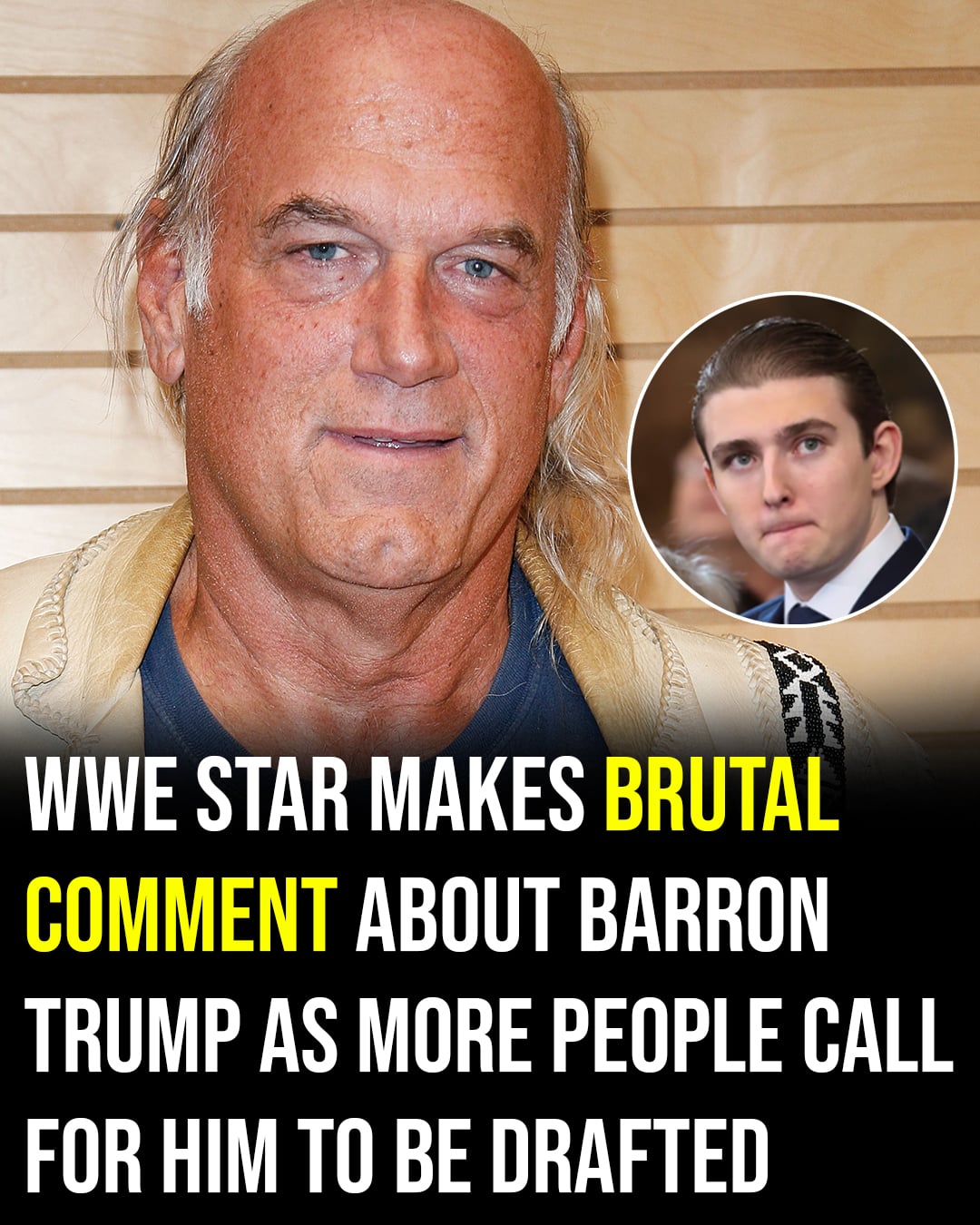
The worlds of professional wrestling, military service, and American politics collided in an intense moment during a recent appearance by Jesse Ventura on a program hosted by Piers Morgan. Ventura — a former Governor of Minnesota, Vietnam-era veteran, and longtime public commentator — didn’t limit himself to a typical political critique of the Trump family. Instead, he delivered a sharp and layered argument that challenged the foundations of their public image.
Drawing on his experience both in the wrestling arena and in the military, Ventura turned what might have been a routine interview into a widely discussed exchange that has once again sparked debate about the Trump family’s relationship with the U.S. armed forces.
Ventura opened the discussion by leaning into the skepticism that has long shaped his public persona. He questioned the widely circulated narrative surrounding the 2024 assassination attempt on Donald Trump, even borrowing terminology from professional wrestling to suggest the possibility that the incident might have been “a work” or staged event. Referring specifically to what he claimed was a lack of visible scarring on Trump’s ear, Ventura suggested that aspects of the story deserved closer scrutiny.
However, this line of skepticism quickly became only the introduction to a far more direct and controversial challenge — one aimed at the youngest member of the Trump family, Barron Trump.
Shifting the conversation from past events to future responsibility, Ventura publicly suggested that the eighteen-year-old consider enlisting in the United States military. For Ventura, the idea was not presented as a casual remark but as what he framed as a matter of principle.
He accused Donald Trump of avoiding military service during the Vietnam War, referencing the five deferments that allowed him to avoid the draft. Ventura described this history as evidence of a lack of personal courage, arguing that Barron could take a different path.
According to Ventura, if political figures ask citizens to support military power and patriotic ideals, they should also demonstrate a willingness to contribute personal sacrifice.
In his words, Barron could “do something your father didn’t have the courage to do.”
Ventura expanded the criticism beyond Donald Trump alone, pointing out that despite the family’s frequent use of military-focused language and patriotic imagery, no member of the Trump family has served in the armed forces.
He also dismissed arguments that Barron Trump’s height might make military service impractical. To support his point, Ventura referenced former NBA star David Robinson, known as “The Admiral,” who served in the U.S. Navy despite standing seven feet tall.
For Ventura, Robinson’s example demonstrated that physical stature is not a barrier when genuine willingness to serve exists.
In Ventura’s view, the height argument becomes little more than an excuse — a shield used by individuals who remain disconnected from the everyday sacrifices made by many working-class Americans who join the military.
His blunt remarks quickly ignited discussion across social media and political commentary platforms.
Supporters of Ventura argue that his perspective reflects authenticity. As someone who served in the Navy’s Underwater Demolition Teams, they believe he speaks from firsthand experience about sacrifice and duty.
Critics, however, see the comments very differently. Some argue that targeting Barron Trump — who is only just entering adulthood — unfairly places the burden of political disputes on someone who has not yet chosen his own path.
Regardless of where people stand on the debate, Ventura’s comments have reopened a familiar American conversation about patriotism, military service, and political leadership.
At its core, his argument was less about Barron Trump personally and more about the expectations placed on powerful political families.
Ventura’s message was simple but provocative: leadership, in his view, should be measured not by rhetoric but by shared sacrifice.
As the interview continues to circulate online, the exchange serves as a reminder of Ventura’s long-standing philosophy.
In his world, respect is never inherited.
It must be earned — often through the discipline, responsibility, and sacrifice represented by a military uniform.