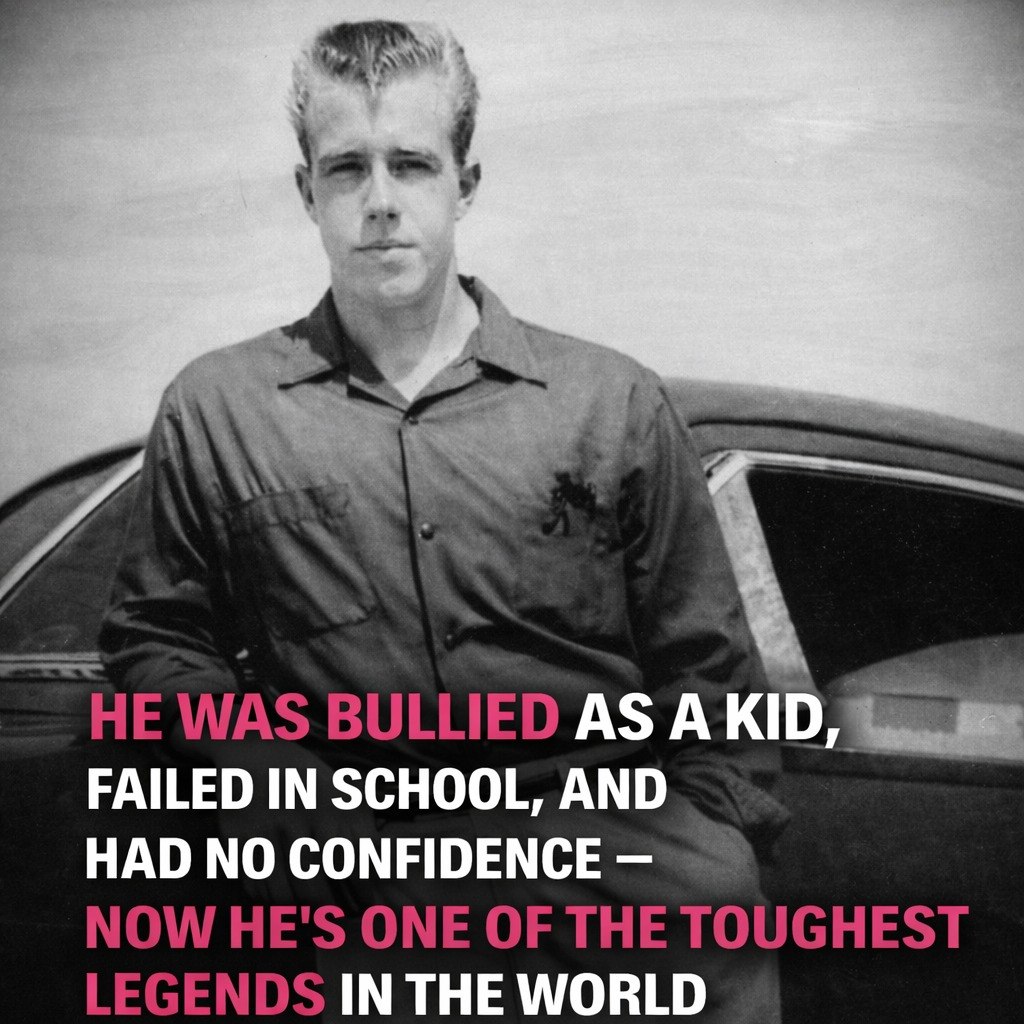
The image of Chuck Norris is deeply embedded in global popular culture as the ultimate symbol of invincibility. In modern times, he has become the subject of endless “facts” and memes portraying him as a man who can outrun time, squeeze orange juice from a lemon just by looking at it, and win a game of Connect Four in three moves. But the real story behind the legend is far more powerful than internet folklore. Before he was a Texas Ranger or a world-class martial artist, Chuck Norris was a child shaped by invisibility. His life story is not one of natural dominance, but of a hard-earned transformation from a shy, bullied boy into a lasting symbol of resilience.
Born Carlos Ray Norris on March 10, 1940, in the small town of Ryan, Oklahoma, his early life was marked by instability and hardship. His father, a World War II veteran, struggled with severe alcohol addiction, creating a difficult and often impoverished home environment. Without a stable father figure, young Carlos grew up feeling untethered and deeply insecure. He was not the athletic powerhouse people might imagine today. Instead, he was an average student who lacked coordination and confidence. At school, he became an easy target for bullies, carrying the shame of being “the skinny kid” who could not defend himself. For much of his youth, Chuck Norris lived in the shadow of fear, searching for a version of himself that felt strong enough to face the world.
The direction of his life changed after his parents divorced and he moved with his mother and brothers to California. While the new setting offered a fresh beginning, the internal struggle remained. After graduating from high school, Norris felt lost and without real direction. Looking for structure and purpose, he enlisted in the United States Air Force in 1958. That decision became the turning point of his life. Stationed at Osan Air Base in South Korea, he was introduced to the martial art of Tang Soo Do. In the disciplined, respectful, and demanding world of Korean martial arts, the shy boy from Oklahoma finally discovered something that made sense to him.
The change did not happen overnight. It was forged through sweat, repetition, and thousands of hours of training. Martial arts gave Norris more than self-defense; it gave him a philosophy for living. He learned that confidence is not loud or aggressive, but quiet and internal, built through preparation. By the time he returned to the United States, the timid young recruit had become a focused and formidable martial artist. He went on to open his own karate schools, teaching the same lessons of discipline and self-respect that had transformed his own life.
His rise in the professional fighting world during the 1960s quickly became the stuff of legend. After suffering some early defeats, Norris refused to give up. In 1968, he won the Professional Middleweight Karate champion title and held it for six straight years. His dominance in the ring came from a calm, tactical style that unsettled opponents. He was more than a fighter; he was a student of movement. During this period, he also caught the attention of another rising legend, Bruce Lee. The two met during a martial arts demonstration and formed a friendship built on mutual respect and a shared dedication to perfecting their skills.
That friendship led to one of the most iconic moments in martial arts film history. In 1972, Bruce Lee invited Norris to Rome to film the final fight scene in Way of the Dragon. Their battle inside the Colosseum remains one of the greatest martial arts sequences ever captured on screen. It placed Norris’s raw strength against Lee’s speed and fluidity, and although the story required Norris to lose, the performance helped launch him into Hollywood. Suddenly, the man who had once been too shy to speak up in class was being sought out by filmmakers who saw in him the “silent hero” audiences were drawn to.
The 1980s established Norris as a major figure in the action genre. Through films like A Force of One, The Octagon, and the Missing in Action series, he built a reputation as the quiet defender of justice. His characters were usually men who spoke little but acted decisively, reflecting his personal belief that true strength does not need to boast. But it was his move to television in 1993 that made him a permanent cultural icon. Walker, Texas Ranger ran for eight seasons and became a worldwide phenomenon. As Cordell Walker, Norris represented a moral center that audiences connected with, blending classic Western values with high-level martial arts.
What makes Chuck Norris’s legacy so lasting is that he never forgot the boy who had once been bullied in Oklahoma. Even at the height of his fame, he stayed deeply committed to helping others, especially through his Kickstart Kids program. Created with support from the Bush family, the organization brought martial arts into middle schools to help at-risk youth develop character and self-esteem. Norris understood that the same tools that changed his own life, discipline, respect, and physical fitness, could also help children facing the same insecurities he once knew. To him, the true meaning of being tough was not how many people you could defeat, but how many lives you could strengthen.
In later years, Norris embraced his legendary status with his usual sense of humor. He often joked about the “Chuck Norris Facts,” recognizing that the exaggerated stories about his strength were really a tribute to the values he represents. Even after stepping away from the intense demands of leading-man roles, his influence continued through books on philosophy, advocacy for fitness, and support for veterans’ causes. He showed that an action hero does not have to become a caricature; he can also be a man of faith, a devoted husband, and a mentor.
The life of Chuck Norris is a powerful lesson in human will. It reminds us that where we begin does not have to define where we end. The shy, unathletic boy who once felt invisible grew into a man whose name is recognized all over the world. He did not discover strength by accident; he built it step by step, through years of relentless effort. Today, his name is associated with toughness, but his life stands for something deeper: the courage to transform. Chuck Norris did not become a legend only because of his roundhouse kick; he became one because he refused to remain a victim of his circumstances.