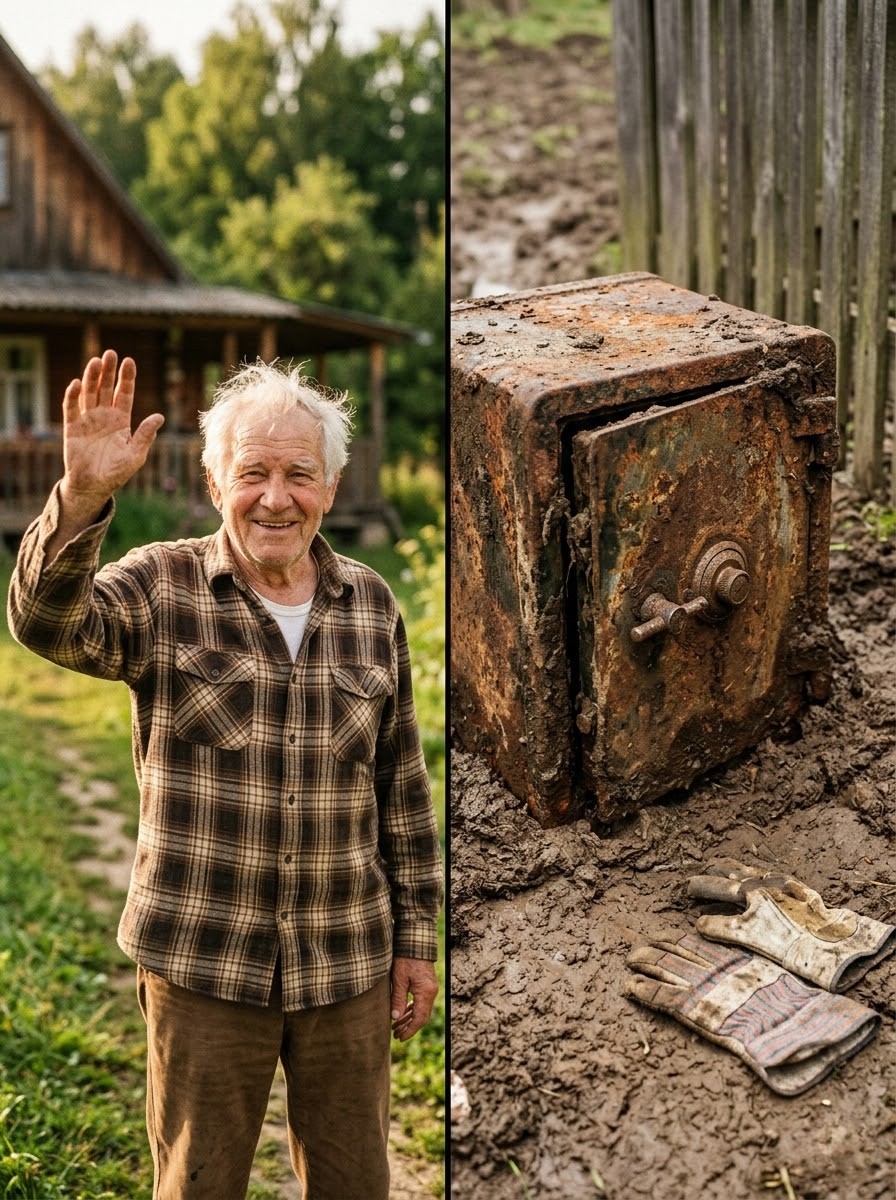
I am a thirty-eight-year-old mother, raised by my own mother, Nancy, to keep life organized and certain things quietly unspoken. I followed that structure closely. My life with my husband, Richie, was stable, predictable, and, I believed, complete. That sense of certainty shifted when my elderly neighbor, Mister Whitmore, passed away. The morning after his funeral, I discovered an envelope in my mailbox with my name written in his careful, familiar handwriting. Inside was a short note. He wrote that something had been buried in his yard for decades and asked me to look beneath the old apple tree.
Richie offered to come with me, but I decided to go alone. The yard was still and quiet, the tree exactly as it had always been. I began digging without truly knowing what I expected to find. It didn’t take long before the shovel struck something solid—a small metal box, worn by years underground. Inside, there was a photograph of a young man holding a newborn beneath the bright lights of a hospital room. Next to it was my original birth bracelet. The letter underneath explained what the items had already suggested. My mother had been nineteen. The man had been pushed out of her life. He had not left completely—he had simply moved next door. Close enough to watch, but never close enough to speak.
Richie found me still sitting there, trying to process something that didn’t fit into the life I believed I understood. I called my mother. When she arrived and saw the photograph, there was no need for many questions. She explained the pressure she had faced, the expectations placed upon her, and the decision she made to continue her life without him. She said it was meant to protect me. I listened, but I didn’t leave the conversation there. Protection can be genuine, but so can avoidance—and sometimes the two are not the same.
The days that followed were not dramatic, but they carried quiet weight. Family members offered their perspectives, some in defense, others in quiet agreement. During one dinner, my aunt said my mother had done what she needed to do. I responded calmly that she had done what she believed she could at the time—but that did not erase the impact of what had remained hidden. My mother apologized. Not as a full resolution, but as an acknowledgment of what had been left unsaid.
Later, I visited his grave. I brought apple blossoms—not as a grand gesture, but as something simple and appropriate. We had lived side by side for years without knowing the truth about that closeness. That part of the story cannot be changed.
What can change is what I choose to carry forward.
Forgiveness, if it arrives, will take time. But clarity has already come. And some truths, once uncovered, no longer ask to be buried again.