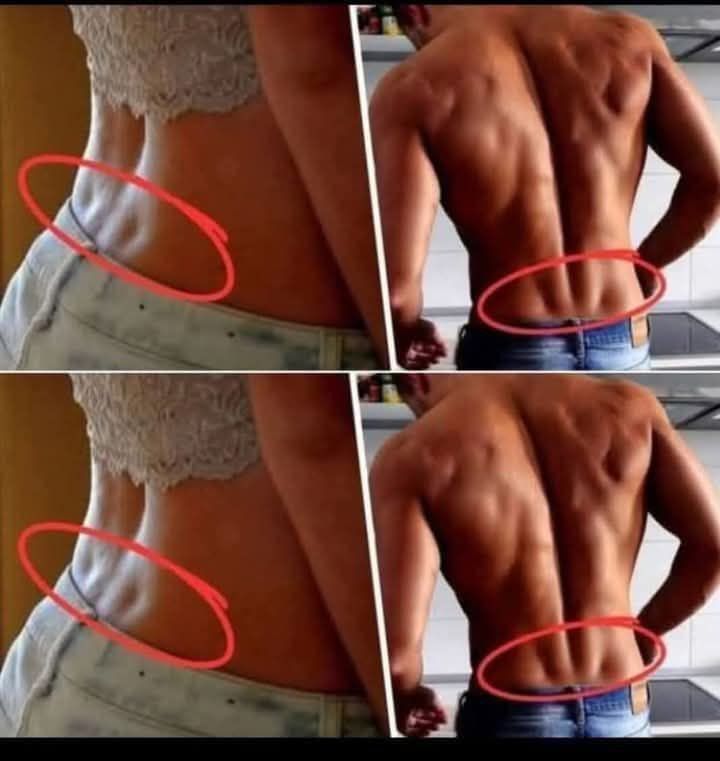
Have you ever noticed two small, symmetrical indentations just above the hips on the lower back? They are subtle details that many people barely notice unless the lighting or body position makes them more visible. For those who have them, however, they often attract curiosity. These small features, commonly known as Venus dimples, have long been linked to beauty, fitness, and sometimes even overall health. But beyond their visual appeal, what exactly are they and what do they actually reveal about the body?
Venus dimples are small indentations located on the lower back, just above where the pelvis begins. Their name comes from classical mythology and references Venus, the Roman goddess associated with love and beauty—an indication of how these features have been admired throughout history. In men, similar indentations are sometimes called Apollo holes, named after the god symbolizing strength and ideal physical form. Despite the different names, the anatomical explanation behind them is identical for both men and women.
The formation of these dimples is not simply related to muscle tone or body fat. Instead, they are created by a short ligament that connects the skin directly to a specific point on the pelvis known as the posterior superior iliac spine. This connection pulls the skin slightly inward, creating the visible indentation. Because this structure depends on skeletal anatomy and connective tissue, the presence of Venus dimples is largely genetic. In simple terms, you either have the anatomical structure for them or you don’t.
Genetics play the biggest role. If your parents or close relatives have Venus dimples, the chances increase that you might have them as well. However, even when the structure exists, the dimples may not always be clearly visible. Body composition can influence how noticeable they are. Higher body fat levels can make them less defined or even hide them completely, while a leaner physique can make them stand out more. This sometimes leads people to believe that these dimples can be developed through exercise.
That idea is one of the most common misconceptions. No specific workout or training routine can create Venus dimples if the ligament structure isn’t naturally present. They are not muscles that can be built like abs or glutes. However, if someone already has the genetic predisposition, maintaining a healthy body weight and staying physically active may make them more visible. Reducing excess fat around the lower back can reveal dimples that were always there but simply hidden.
Because they are often visible on leaner bodies, Venus dimples have gained popularity within fitness culture as a sign of good physical condition. Many people view them as an indicator of low body fat and strong core engagement. While there is some association between these features and body composition, it’s important not to overinterpret their meaning. Having them does not automatically mean someone is healthier or fitter than someone who does not.
Another common belief is that Venus dimples may be connected to improved circulation or physical performance. In reality, scientific evidence supporting such claims is limited. While individuals with visible dimples may sometimes have lower levels of visceral fat—simply because the dimples are easier to see on leaner bodies—the dimples themselves are not responsible for better health outcomes. They are more a visual byproduct than a true health indicator.
That said, they may occasionally appear alongside positive lifestyle habits. People who exercise regularly, maintain balanced nutrition, and stay physically active are more likely to have body compositions where these dimples become visible. In that sense, Venus dimples can sometimes accompany healthy routines, but they are not a direct measure of health.
From a cultural perspective, these dimples have been admired for centuries. In classical art and Renaissance sculpture, the lower back and hip area were often highlighted as symbols of balance, proportion, and beauty. In modern times, the same appreciation continues, particularly in fitness communities and on social media where defined body features are frequently emphasized. Still, beauty standards change over time, and what is admired in one culture or era may not hold the same meaning in another.
It’s also important to remember that not having Venus dimples is completely normal. Human bodies vary greatly, and these indentations are simply one of many natural anatomical differences. Their absence says nothing negative about a person’s strength, attractiveness, or health. Many physically fit and healthy people do not have them, while some who do may not necessarily meet traditional fitness ideals.
Focusing too heavily on specific physical traits can lead to unnecessary comparisons or unrealistic expectations. The human body is shaped by a complex mix of genetics, lifestyle, and environment. Some features can be influenced through habits and training, while others are simply part of natural anatomy. Recognizing this difference helps shift attention toward what truly matters—overall health, strength, mobility, and daily well-being.
If you happen to have Venus dimples, they can simply be seen as a unique detail of your body. If you don’t, there is nothing missing. They are not something that needs to be achieved, and they certainly aren’t a requirement for being healthy or physically fit.
In the end, Venus dimples are simply a natural anatomical variation. They result from genetics and structural connections beneath the skin rather than from exercise or training. While they may carry some aesthetic appeal or cultural interest, their presence or absence does not define health or personal value.
What matters far more is how you take care of your body—how you move, what you eat, how well you recover, and how balanced your lifestyle is. These factors influence long-term well-being, energy levels, and overall health far more than small physical features like Venus dimples.