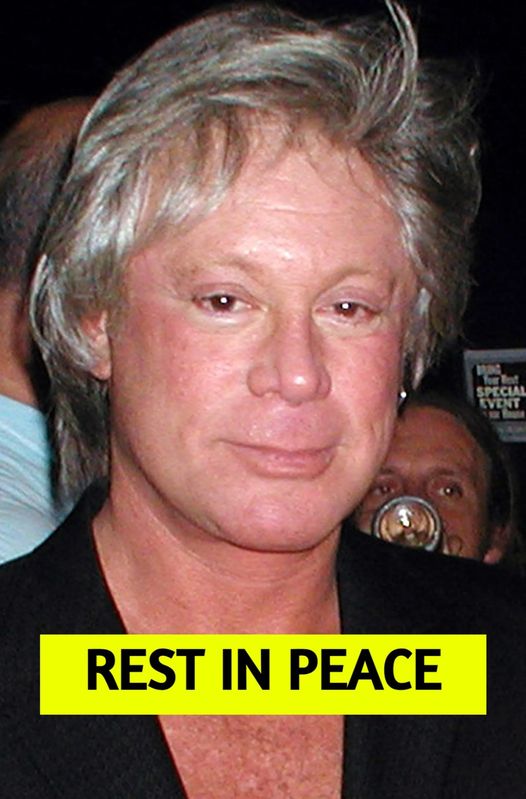
The passing of Eric Carmen at the age of 74 does more than mark the end of a life—it quietly closes a chapter that lived inside the memories of millions. For many people, his music wasn’t simply something you listened to. It was something you felt, something that settled into moments you didn’t realize would matter later. His voice had a way of reaching people in a place that didn’t need explanation, only recognition.
From the raw energy of “Go All the Way” with The Raspberries to the emotional pull of “Hungry Eyes,” his work carried a kind of honesty that never felt forced. It didn’t depend on complexity or technical display. It worked because it was real. He seemed to understand something many artists spend their whole careers trying to capture—that the simplest emotions, when expressed sincerely, are the ones that stay with people the longest.
His songs didn’t just play quietly in the background of people’s lives. They became part of their personal stories. A first love. A late-night drive. A moment of heartbreak or hope. Years could pass, and then a single note or familiar lyric would bring everything back with surprising clarity. That kind of connection can’t be manufactured. It comes from sincerity, from creating without hiding behind distance or performance.
What made his music endure wasn’t only its sound, but its emotional precision. He had the ability to take something fleeting—a glance, a feeling, a moment that might otherwise pass unnoticed—and give it meaning. He turned ordinary experiences into something lasting, something people could carry long after the song ended.
But the true measure of a life is never limited to what happens on a stage.
Behind the success, recognition, and musical legacy, there was a man whose presence mattered most in quieter ways. Those who knew him didn’t only speak about his talent. They talked about his steadiness, his attentiveness, and the way he showed up in the lives of the people closest to him. He wasn’t defined by applause or headlines. He was defined by how he lived when no one was watching.
As a husband and father, he seemed to understand something that often gets lost in the pursuit of success—that what you build in relationships carries more weight than anything built in public view. The roles he held in private weren’t secondary to his career; they were central to who he was.
His wife Amy’s words, “Love Is Everything,” resonate because they don’t feel like something said in response to loss. They feel like a reflection of a life already lived with that understanding at its core. It’s not a phrase meant simply to comfort others. It’s a truth that had been practiced day after day in ways that didn’t require recognition.
And that’s where the deeper meaning of his life settles.
Because success fades. Charts change. Recognition moves on. Even the most celebrated names eventually step out of the spotlight, whether by choice or by time. What remains isn’t the position someone held in the world’s eyes, but the impact they left in the lives of others.
Music, at its best, doesn’t disappear. It changes form. It becomes memory, emotion, association. It appears years later without warning, tied to a moment you didn’t know would matter so much. In that sense, what Eric Carmen created didn’t end with any single performance or era. It continues quietly each time someone hears his voice and feels something they can’t quite put into words.
There’s something powerful about that kind of legacy.
It doesn’t demand attention. It doesn’t rely on constant visibility. It exists in the background—steady and consistent—woven into the personal histories of people who may never have met him but still carry a piece of what he created.
As listeners return to his songs, they’re not just revisiting music. They’re reconnecting with themselves—with who they were at a certain time, with what they felt, with moments that have long since passed but haven’t lost their meaning. His work becomes a bridge between then and now, reminding people that what they experienced was real, and still is.
And maybe that’s what defines a life like his more than anything else.
Not just what was achieved, but what was given. Not just what was heard, but what was felt. Not just what was created, but what continues to exist because of it.
His physical presence may be gone, but something of him remains in a quieter, more enduring way.
It lives in the melodies that still find their way into people’s lives.
In the lyrics that still resonate when words are otherwise hard to find.
In the emotions that rise unexpectedly when a familiar song begins to play.
And in the understanding that anything created with honesty and care doesn’t simply disappear.
It stays.
Not always loudly, not always visibly, but in a way that matters just as much—sometimes even more.
Because what comes from a genuine place doesn’t end when a life does.
It continues, carried forward in memory, in feeling, and in the countless moments where it still manages to reach someone exactly when they need it.