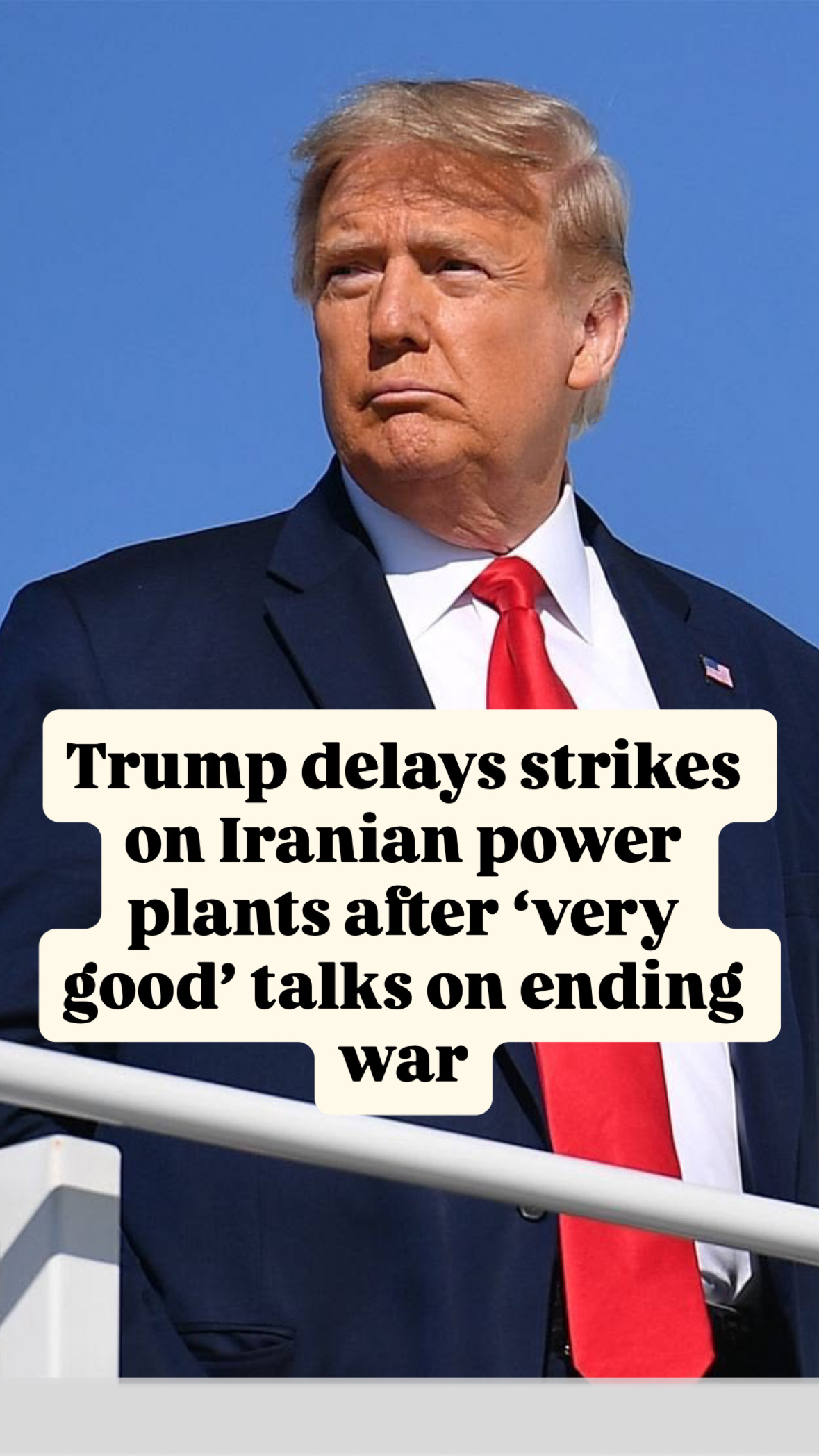
In a sudden shift that has drawn global attention, former U.S. President Donald Trump announced a five-day delay in planned military strikes against Iran, claiming that Washington and Tehran had held what he described as “very good and productive conversations.”
The decision comes after days of intense military tension in the Middle East. Earlier, Trump had issued a 48-hour ultimatum demanding Iran reopen the Strait of Hormuz, a vital global oil shipping route that has been disrupted during the ongoing conflict. The warning included threats of strikes against Iranian energy and power infrastructure if Tehran failed to comply.
However, on Monday, Trump said diplomatic communication over the weekend appeared promising enough to temporarily hold off on the attacks. According to his statement, the U.S. is exploring the possibility of a broader agreement that could lead to a “complete resolution” of the conflict.
Yet the narrative quickly became more complicated.
Iran Flatly Rejects Trump’s Claims
Iran’s Foreign Ministry responded within hours, categorically denying that any talks had taken place between Tehran and Washington, either directly or through intermediaries.
Iranian officials suggested that Trump’s statements may be an attempt to buy time or influence global markets rather than reflect actual negotiations. Some Iranian media outlets even claimed the pause in U.S. military action shows that Washington is reconsidering further escalation.
The conflicting messages have created a cloud of uncertainty about what is really happening behind the scenes.
Global Markets React to the Sudden Pause
Despite the confusion, global markets reacted immediately. Oil prices dropped sharply following Trump’s comments about potential diplomacy, while stock markets in several countries rose on hopes that the war might de-escalate.
The Strait of Hormuz carries roughly one-fifth of the world’s oil supply, making any disruption there a major concern for global energy markets and economic stability.
A War Still on Edge
The war between U.S.-Israeli forces and Iran, which began weeks ago with large-scale strikes on Iranian targets, has already caused thousands of casualties and significant damage across the region.
While several countries — including Oman, Turkey, and Qatar — are reportedly trying to mediate, no clear diplomatic breakthrough has been confirmed.
For now, the five-day pause ordered by Trump has temporarily slowed the march toward a larger escalation. But with Washington claiming progress and Tehran denying any talks at all, the situation remains volatile.
The coming days may determine whether the Middle East moves toward negotiations — or deeper into conflict.