The global political climate in 2026 has increasingly pushed issues of security and military preparedness into public conversation. With ongoing international conflicts and bold geopolitical proposals circulating online, many Americans have begun searching for answers about the possibility of a wider war. Online searches for phrases such as “World War III” and “U.S. military draft rules” have surged to levels rarely seen in recent decades, revealing a growing sense of uncertainty among a population that has lived for more than fifty years without compulsory military service.
To understand how a draft might work today, it is important to look at the structure of the current U.S. military system. Since conscription officially ended in 1973 after the Vietnam War, the United States has operated entirely with a volunteer military force. This model has served the country for decades, but the legal framework for reinstating a draft still exists within federal law. Although no draft is currently active, the Selective Service System continues to operate as the mechanism that would allow the government to mobilize conscription if Congress and the President declared a national emergency.
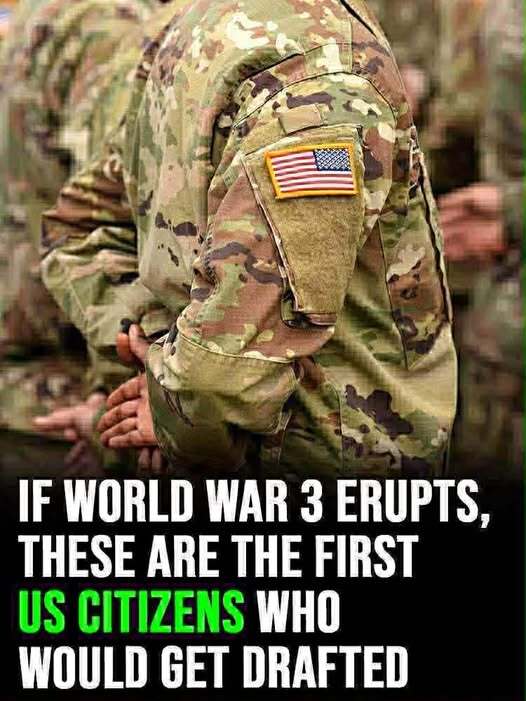
For many younger Americans who grew up under the volunteer system, the process of a military draft remains largely unfamiliar. If conscription were ever reintroduced, it would be organized through a lottery system designed to call up individuals based on age priority. The first group considered would be men in the calendar year they turn 20. If additional personnel were required, the draft would expand sequentially to include men aged 21 through 25. Only after those groups were exhausted would younger individuals—those aged 19 and eventually 18—be considered.
Under current U.S. law, registration with the Selective Service is still mandatory for most male residents between the ages of 18 and 25. This requirement extends not only to American citizens but also to many non-citizens living in the country, including permanent residents, refugees, and asylum seekers. While a few limited exemptions exist—such as for certain religious officials or individuals who are institutionalized—the majority of eligible men must register. In some situations, students who are drafted may be granted temporary postponements to complete a semester or academic term, but the obligation itself remains in place.
One topic frequently discussed in recent years is whether women should also be included in the Selective Service system. At present, women are neither required nor allowed to register for a potential draft. However, the debate continues as women now serve in every military combat role. Any change to the current policy would require Congress to amend the Military Selective Service Act.
Failing to register before the age of 26 can carry serious consequences, even though criminal prosecutions are extremely rare today. The greater impact usually comes through administrative penalties. Individuals who fail to register may lose eligibility for federal student aid, be disqualified from certain government employment opportunities, and in some cases face complications when applying for U.S. citizenship.
During periods of international tension, public discussions about war often become louder than the legal realities behind military policy. While the idea of a draft can generate fear, it remains a contingency measure rather than an immediate plan. Reinstating conscription would require significant political agreement and formal legislative action before it could become part of everyday American life again.