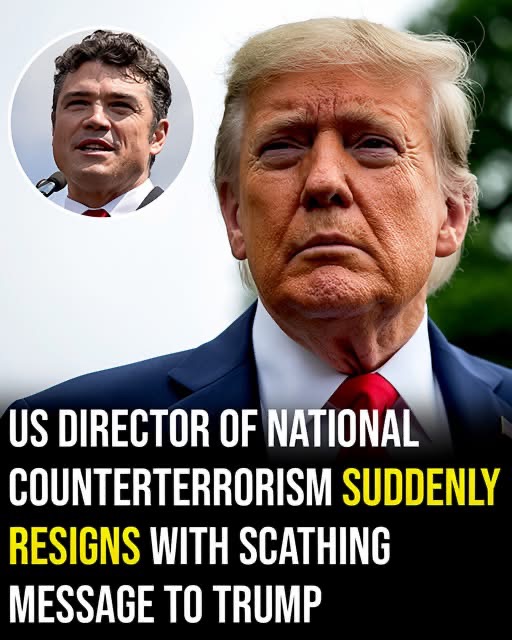
The landscape of American intelligence was fundamentally altered on Tuesday when Joe Kent, the Director of the National Counterterrorism Center (NCTC) and a staunch ally of the administration, resigned in a scathing public protest. Kent, a retired Green Beret with deep roots in the Trump political movement, stepped down specifically to condemn the ongoing U.S. military conflict in Iran. His departure marks a significant rupture within the national security apparatus, as one of the administration’s most loyal veterans directly challenged the premise of the current war.
In an emotionally charged resignation letter addressed to Donald Trump, Kent argued that the justification for the invasion was fabricated. “I cannot in good conscience support the ongoing war in Iran. Iran posed no imminent threat to our nation,” Kent wrote. He further alleged that the United States had been maneuvered into the conflict by external interests, stating plainly that the war was initiated due to “pressure from Israel and its powerful American lobby.” Kent’s rhetoric drew direct parallels to the 2003 Iraq War, which he characterized as a catastrophic error driven by similar tactical deceptions that cost thousands of American lives.
Kent’s resignation has sent shockwaves through the intelligence community, where directors of major security institutions rarely leave their positions in such a public and confrontational manner. The National Counterterrorism Center plays a central role in coordinating counterterrorism analysis across agencies including the CIA, FBI, and Department of Defense. For its leader to resign over policy disagreements signals a deeper fracture between strategic intelligence assessments and the political decisions guiding military operations.
Within hours of the letter becoming public, reactions began to emerge from both supporters and critics of the administration. Some lawmakers argued that Kent’s claims raise serious questions about the intelligence used to justify the conflict, calling for congressional briefings and oversight hearings. Others dismissed the resignation as a political move by a figure attempting to distance himself from an increasingly controversial war effort.
The situation also highlights the broader debate over how intelligence is used in shaping foreign policy decisions. Analysts have long warned that intelligence findings can become politicized during times of conflict, particularly when leaders are under pressure to justify military action. Kent’s reference to the Iraq War underscores those concerns, reminding observers of a period when disputed intelligence about weapons of mass destruction helped push the United States into a prolonged and costly conflict.
As the war in Iran continues to unfold, Kent’s resignation is likely to intensify scrutiny over the origins and objectives of the campaign. For some observers, it represents a rare moment when a senior national security official publicly challenges the narrative surrounding a military intervention. Whether his departure leads to deeper investigations or fades into the background of an ongoing geopolitical crisis remains uncertain, but it has already sparked a new wave of debate about the role of intelligence, accountability, and dissent within the highest levels of government.