The March wind carried a sharp, biting chill that night, cutting through my wool coat and the quiet certainty I had spent years building. I had just finished a long shift at the sporting goods store, my mind crowded with everyday worries—inventory problems at work, my daughter’s struggles with math, and the constant calculations that come with trying to keep a middle-class life afloat. The world felt small and narrow in that moment, reduced to the glow of my phone and the short walk to the bus stop.
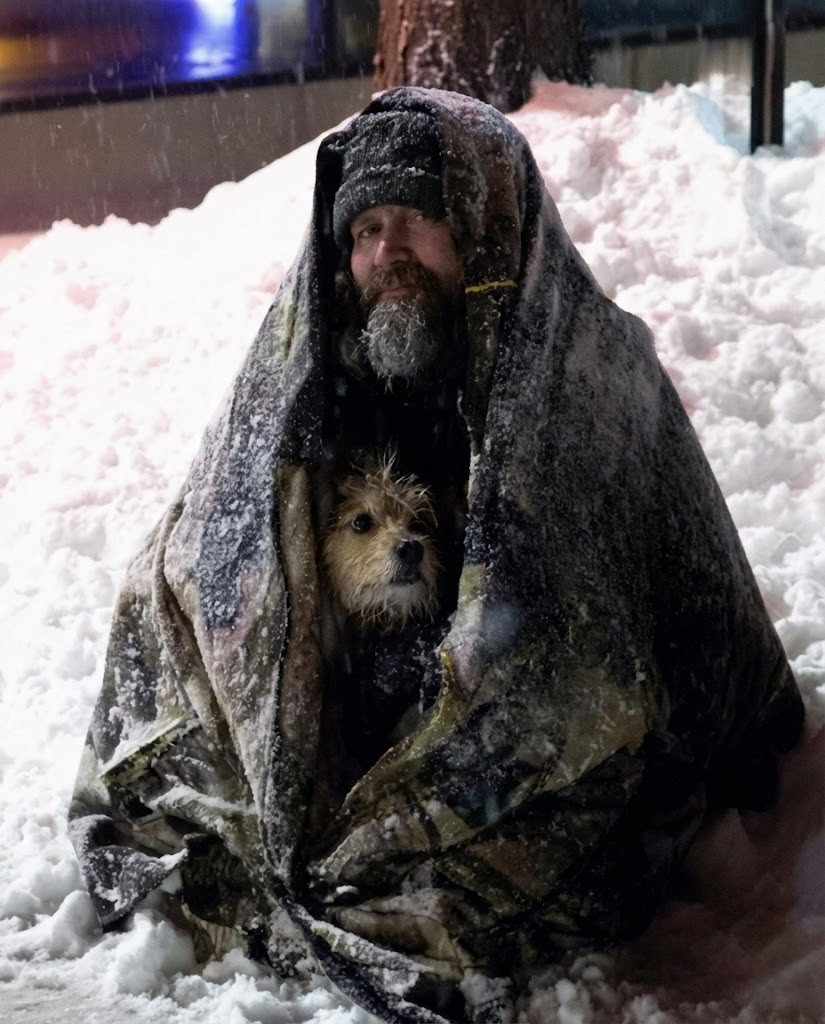
As I hurried past a small shawarma stand near the station, the rotating spit of meat glowing warmly in the darkness, I noticed them. A man stood partly hidden in the shadows, his shoulders hunched against the cold. Beside him was a thin, wire-haired dog, its ribs faintly visible beneath a tangled coat. They weren’t asking anyone for money or food. They were simply watching the stand in complete silence, their attention fixed on the warm food turning slowly in the light.
When the man finally stepped forward and asked the vendor for a cup of hot water, the answer came quickly and harshly. The refusal echoed across the quiet pavement. At that moment, a memory of my grandmother surfaced. She used to say that kindness isn’t decoration—it’s a form of currency that grows more valuable the more you give away.
Without thinking much about it, I stepped up to the counter and ordered two large shawarmas and two hot coffees.
I walked over to the man before he could retreat back into the darkness. His hands shook slightly as he accepted the food and drinks. He whispered a quiet blessing that nearly disappeared into the wind. For a second, I felt like I had stepped into a moment larger than the simple exchange of food. As I turned to leave, he reached out and lightly grabbed my sleeve. From his pocket he pulled a small piece of paper and a short pen. He wrote something quickly, folded the paper, and pressed it into my hand.
“Please,” he said softly. “Read it when you get home.”
I slipped the note into my pocket and continued my routine for the evening—the bus ride, the familiar smell of laundry detergent in the house, the quiet sound of my husband discussing legal work, and the usual struggle of helping the kids with their homework. The note slipped from my mind entirely until the next evening when I was emptying my pockets before doing laundry.
I unfolded the paper casually, expecting maybe a thank-you message or a request for help. Instead, the words hit me like a sudden shock.
“Thank you for saving my life. You already saved it once before.”
Below the sentence was a date from three years earlier and the name of a place I hadn’t thought about in a long time: Lucy’s Café.
The memory came rushing back.
It had been a rainy afternoon, the kind where the city feels gray and heavy. Lucy’s Café was crowded with people drying umbrellas and avoiding eye contact with strangers. A man had walked in soaked from the rain, carrying a sadness that seemed to make everyone around him uncomfortable. I remembered the way people quietly moved their chairs away.
I had ordered a coffee and a croissant and slid them across the counter toward him without saying much. Then I left before he had a chance to thank me. At the time, it felt like a tiny act—something small you do in passing and forget by the end of the day.
But he hadn’t forgotten.
That night I barely slept. The idea that a five-minute interaction from years ago could have helped someone hold on to life was both beautiful and unsettling.
The following evening I went back to the shawarma stand. He was there again, the dog still beside him. This time I didn’t simply give him food. I stayed and talked.
His name was Victor. We moved to a nearby diner where it was warm enough for him to tell his story. He had once worked as a long-haul truck driver with a steady job, a home, and a family. But one accident on a rain-slick highway had changed everything. His injuries left him unable to work, and medical bills piled up faster than he could handle. The stress destroyed his marriage, and depression slowly took over his life.
Victor told me that the day he walked into Lucy’s Café years earlier was the day he had planned to end everything. He had wanted one final warm moment before giving up.
But being treated like a person instead of a problem changed his mind. That small gesture gave him a reason to wait one more day. Soon after, he found the stray dog—an animal that needed him just as much as he needed a reason to keep living. Since then, the two of them had been surviving together.
Listening to Victor made me look at my own life differently. I realized how fragile stability can be, and how often people survive because someone, somewhere, pauses long enough to notice them.
My family soon became part of Victor’s story as well. My husband helped him sort through complicated paperwork so he could replace lost identification and apply for disability assistance he had been denied before. My children organized a small collection drive at school for supplies, and a local veterinarian agreed to treat Victor’s dog free of charge.
What began as a quick moment at a shawarma stand slowly turned into a small community effort.
Within a few months Victor’s life started to stabilize. With proper documents and financial support, he moved into a small studio apartment and found part-time work as a dispatcher for a delivery company—something that used his experience from years on the road without putting strain on his injured hip.
About a year later, on my birthday, someone knocked on my door. When I opened it, I barely recognized the man standing there.
Victor looked steady and confident. He held a small cake and a simple bouquet of flowers. His gratitude wasn’t dramatic or overwhelming. It was quiet, genuine, and lasting.
Looking at him, I realized how easily that night could have been different. I could have walked past the shawarma stand without noticing him. I could have been too tired or too distracted by my own problems.
Instead, a small choice—a meal, a cup of coffee, a moment of attention—changed the direction of someone’s life.
That piece of paper he gave me reminded me of something we often forget while rushing through our daily routines: sometimes the smallest acts of kindness travel further than we ever imagine.