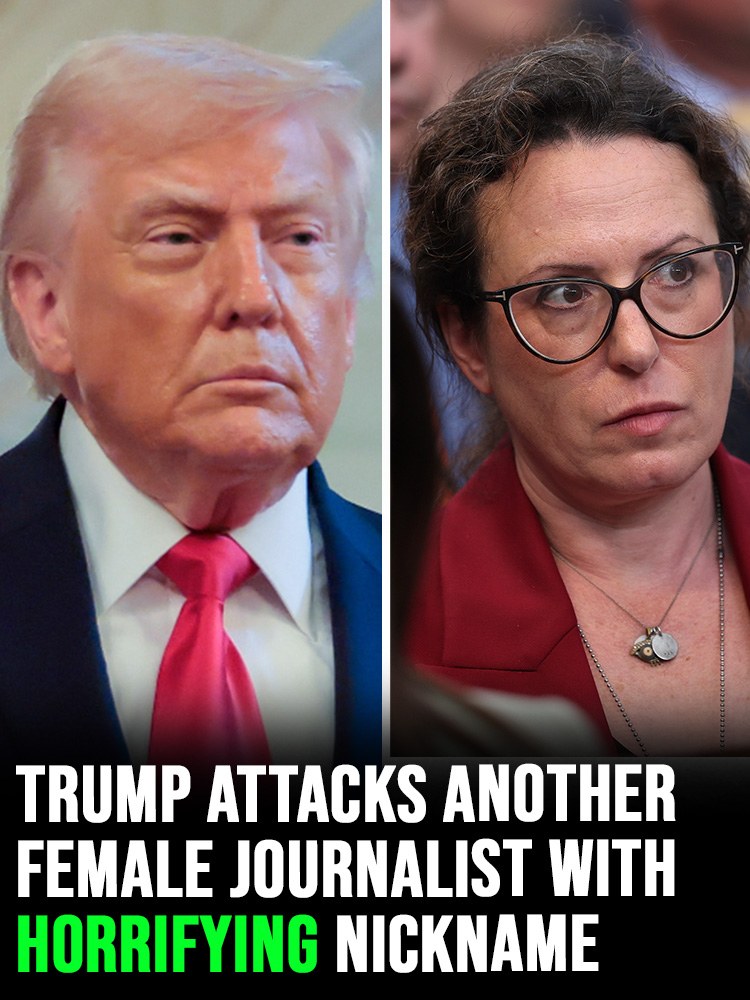
Donald Trump, the former president of the United States, has once again directed public criticism toward a prominent journalist. This time, the focus of his remarks was Maggie Haberman, a well-known White House correspondent for The New York Times. Haberman has reported extensively on several administrations, and while Trump has criticized her work before, the tone of his latest comments continues a long-running tension between the former president and reporters he believes portray him negatively.
On March 6, 2026, Trump used his social media platform Truth Social to publicly attack Haberman. In the post, he used harsh language to describe her reporting and suggested the possibility of legal action involving her and other journalists. Trump wrote that Haberman, whom he referred to with derogatory wording, repeatedly publishes what he claims are inaccurate stories about him. He also hinted that she and others could potentially be included in a Florida-based lawsuit connected to his ongoing legal dispute with The New York Times. The post ended with his signature sign-off referencing himself as President DJT.
Observers have pointed out that while the post was strongly worded, Trump did not clearly explain which specific article or report had triggered his reaction. As a result, the precise cause of his criticism toward Haberman remains unclear. Trump has frequently expressed frustration toward reporters who ask challenging questions or publish investigations he considers unfavorable. Over the years, he has often used public speeches, interviews, and social media messages to criticize journalists directly.
Female reporters, in particular, have sometimes found themselves at the center of Trump’s criticism. For example, in December 2025 he publicly criticized CNN correspondent Kaitlan Collins during an interview, calling her “stupid and nasty” and later criticizing her tone and presence. Earlier, in February 2026, he also dismissed a question from Washington Post reporter Natalie Allison while speaking aboard Air Force One. During that exchange he interrupted her question and remarked that The Washington Post was struggling with readership while accusing the reporter of having a “bad attitude.”
These incidents reflect a broader pattern in which Trump has repeatedly used public platforms to challenge journalists and major news organizations. Social media, in particular, has served as a direct communication channel for him to address supporters and respond to criticism from the press. His public remarks about reporters have often combined personal criticism with political arguments about media bias.
Maggie Haberman, the journalist now at the center of the latest controversy, is a Pulitzer Prize-winning reporter known for her extensive coverage of Trump and the White House. Over the years, her reporting has included detailed investigations into internal administration dynamics, political strategies, and relationships between advisers and outside figures. Her work has been widely cited across major news organizations and has sometimes generated strong reactions from political supporters and critics alike.
Beyond daily reporting, Haberman has also established herself as a prominent author. In 2022 she published the biography Confidence Man: The Making of Donald Trump and the Breaking of America, which explored Trump’s business career, political rise, and governing style. The book attracted significant attention for its detailed accounts of behind-the-scenes political events. According to media reports, Haberman is currently working on another book with a colleague from The New York Times, focusing on Trump’s activities after leaving the presidency and the evolving political landscape around him.
Some analysts believe Trump’s latest comments may be connected to recent reporting involving changes within the Department of Homeland Security, including coverage surrounding the firing of Secretary Kristi Noem. However, no direct confirmation has been provided linking that story to Trump’s social media post.
Media experts say Trump’s use of personal insults toward journalists has been consistent with language he has used in the past. Terms criticizing reporters as dishonest or biased have frequently appeared in his speeches and online statements. Supporters often view these remarks as a defense against what they perceive as unfair media coverage, while critics argue that such attacks can contribute to hostility toward journalists.
Legal specialists also note that Trump’s suggestion of potential lawsuits raises complex legal questions. In the United States, defamation cases involving public figures must meet strict standards, including proof that a statement was made with actual malice or reckless disregard for the truth. While Trump has previously filed lawsuits against media organizations, many of those cases have either been dismissed or resolved without major legal precedent.
For journalists, public criticism from political figures is not uncommon, particularly in highly polarized political environments. Haberman herself has continued reporting on political developments despite past attacks, maintaining a reputation for investigative journalism and detailed sourcing.
Observers also point out that Trump’s posts on Truth Social illustrate how modern political figures can communicate directly with supporters without relying on traditional press channels. By using social media, political leaders can frame narratives quickly and respond to criticism in real time.
Media analysts suggest that such posts often serve multiple purposes. They can rally political supporters, influence the public narrative surrounding a news story, and signal dissatisfaction with coverage by specific reporters or outlets.
Haberman’s reporting continues to shape public discussion around political leadership, government decisions, and internal policy debates. Her work is often cited by other journalists, researchers, and political analysts who study contemporary American politics.
The relationship between political leaders and the press has always been complex. Investigative journalism is traditionally viewed as a mechanism for accountability, while political figures often challenge coverage they believe misrepresents their actions or intentions.
In recent months, Trump’s disputes with reporters including Kaitlan Collins, Natalie Allison, and Maggie Haberman have highlighted ongoing tensions between powerful public figures and the media in the United States. Media scholars note that female journalists sometimes face particularly intense scrutiny and personal criticism when covering political figures.
Despite criticism, reporters such as Haberman continue to pursue investigative stories, reflecting the broader role of journalism in documenting political decisions and providing information to the public. Many experts view this dynamic—conflict between the press and political leaders—as a fundamental aspect of democratic systems.
For the public, debates like this illustrate the influence media narratives can have on political discourse. Journalists provide context and analysis of government actions, while political leaders respond by defending their positions or challenging coverage they consider unfair.
Haberman’s ongoing reporting, upcoming book projects, and investigative work suggest she will remain a significant figure in political journalism. At the same time, Trump’s continued presence in political conversations ensures that interactions between him and major media figures will likely remain closely watched.
Ultimately, the exchanges between Donald Trump and Maggie Haberman highlight the often adversarial relationship between political power and investigative reporting. Their interactions demonstrate how social media, journalism, and political strategy intersect in shaping modern public discourse.