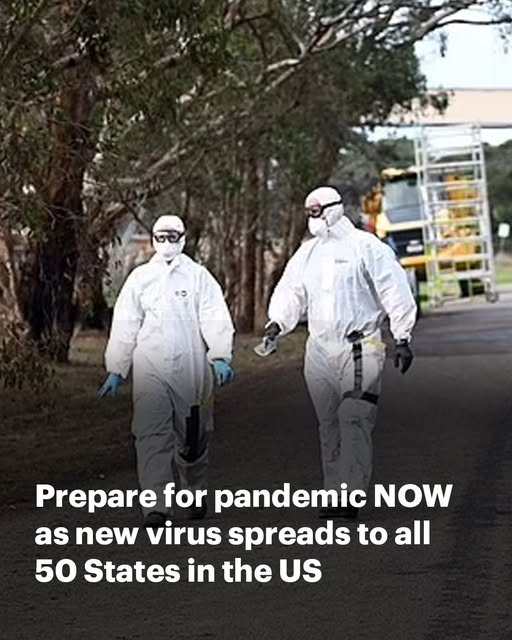
Public health officials in the United States are urging stronger preparation efforts as the H5N1 avian influenza virus continues to expand across the country. What initially began as an issue affecting poultry farms has gradually developed into a broader concern involving livestock and, in some cases, humans.
According to recent reports, the virus has now been detected in all 50 U.S. states, primarily within agricultural environments. Nearly 1,000 dairy cow herds have been affected, and more than 70 human infections have been confirmed through laboratory testing. Health authorities also confirmed the first U.S. death linked to this strain earlier in 2026.
Researchers from the Global Virus Network (GVN) and other international health organizations say the situation should be closely monitored, emphasizing the importance of preparation and surveillance to prevent a larger outbreak.
Growing Impact on Agriculture
The agricultural consequences of the virus have already been significant. Since the outbreak intensified in 2022, more than 168 million poultry birds have either died from the disease or been culled to limit its spread.
This massive loss has placed pressure on the poultry industry and contributed to rising food prices, particularly for eggs and other poultry-related products.
A major shift occurred when the virus began appearing in dairy cattle, something that had not been widely observed before. When viruses spread among mammals, scientists become especially cautious because the opportunity for genetic mutations increases.
Virologists note that while the virus does not currently spread easily between people, the continued circulation in animals creates conditions where future mutations could occur.
Human Cases and Medical Monitoring
The first U.S. fatality connected to this strain of bird flu was reported in Louisiana in January 2026. The patient, who was over the age of 65 and had underlying health issues, developed severe respiratory symptoms.
Genetic testing of the virus in this case revealed that mutations occurred during the infection. Although such changes are not uncommon in viruses, researchers say monitoring these mutations is essential for understanding how the virus evolves.
Health experts are particularly focused on the interaction between animals and humans, often called the “animal-human interface.” When viruses move between species, the potential for new variations increases.
Concerns About Monitoring and Testing
Some public health specialists have expressed concern that the current national response may be too fragmented. In many areas, testing of livestock and farm workers has depended on voluntary participation rather than mandatory programs.
At present, required testing is mainly focused on livestock transported across state lines. Critics argue that broader testing could help provide clearer data about how widely the virus is circulating.
In addition, changes in federal pandemic planning structures have raised questions among some health professionals about coordination and preparedness in the event of a larger outbreak.
Why Scientists Are Watching Pigs Closely
One particular concern involves pigs.
Swine can become infected with both human influenza strains and avian influenza strains. Because of this, pigs are sometimes referred to by scientists as “mixing vessels” for influenza viruses.
If two different strains infect the same animal, genetic material can combine, potentially creating a new version of the virus. Monitoring outbreaks in animals such as pigs, cattle, and wildlife therefore plays an important role in pandemic prevention.
Efforts to Prepare Vaccines and Treatments
In response to the growing threat, pharmaceutical companies and government agencies have begun preparing potential medical countermeasures.
The U.S. government previously awarded a $590 million contract to Moderna to develop an mRNA vaccine targeting the H5N1 virus. Researchers are continuing to study how effective such vaccines might be if human transmission becomes more common.
The United States also maintains a strategic stockpile of approximately 20 million vaccine doses designed for similar influenza strains, and manufacturing systems could potentially produce additional doses if necessary.
Antiviral medications such as oseltamivir (Tamiflu) are also available and are currently used to treat confirmed cases.
Environmental Monitoring Provides Additional Clues
Scientists have also been studying wastewater samples across the country to track the presence of viral fragments in the environment.
Recent data suggests that traces of H5N1 have been found in roughly 25 percent of monitored wastewater sites. In some regions, including parts of California and Iowa, detection rates have been even higher.
Wastewater monitoring does not necessarily mean people are infected, but it provides researchers with a broader view of where the virus may be circulating.
Food Safety and Milk Testing
The U.S. Department of Agriculture (USDA) has also introduced new testing requirements for companies handling raw or unpasteurized milk after viral fragments were detected in some milk samples.
Health officials emphasize that pasteurized milk remains safe, since the pasteurization process effectively destroys the virus.
Still, the discovery highlights how deeply the virus has spread within agricultural systems.
The Importance of Preparedness
Influenza specialists stress that preparation does not mean panic. Instead, it involves improving monitoring systems, strengthening biosecurity on farms, and maintaining investment in medical research.
Experts also recommend simple preventive steps for the public, including:
- Avoiding contact with sick or dead wildlife
- Handling poultry products carefully
- Cooking meat and eggs thoroughly
- Staying informed through reliable health sources
Learning From Past Outbreaks
Public health experts say that recent global health crises have shown how quickly infectious diseases can spread if early warning signs are ignored.
The goal now is to use those lessons to strengthen surveillance systems and ensure rapid responses if conditions change.
While H5N1 currently poses limited risk to the general public, scientists agree that continued monitoring and preparation are essential.
Viruses constantly evolve, and understanding how they move between animals and humans remains one of the most important challenges in modern public health.