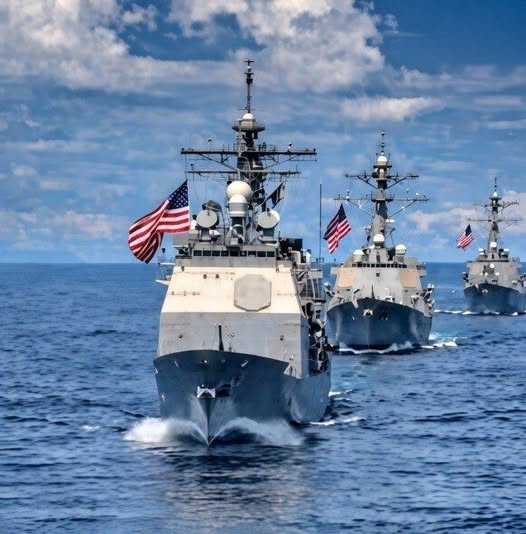
At the end of February 2026, tensions in the Middle East reached a breaking point after a dramatic military escalation reshaped the region’s security landscape. On February 28, the United States and Israel carried out a large-scale coordinated air operation targeting multiple strategic locations inside Iran. The campaign, referred to by U.S. officials as Operation Epic Fury, focused on military infrastructure, command facilities, and air defense systems in several key areas including Tehran, Isfahan, and Qom.
Initial reports surrounding the strikes quickly captured global attention. Among the most controversial claims was that Iran’s Supreme Leader, Ayatollah Ali Khamenei, had been killed during the attacks. If confirmed, the event would represent a historic turning point, transforming what began as a strategic military operation into a far broader geopolitical crisis.
However, the tensions leading up to the 2026 confrontation had been building for years. Throughout 2024 and 2025, hostilities between Iran, Israel, and the United States increasingly moved from covert operations to more direct military exchanges. Drone strikes, missile launches, and maritime incidents gradually destabilized regional security.
One of the most significant flashpoints occurred in the Red Sea, where Iranian-aligned Houthi forces began targeting commercial shipping routes. These attacks forced U.S. naval forces to increase their presence in the region in order to protect global trade corridors.
At the same time, Iran’s missile and drone programs were advancing rapidly, raising concerns among Western and regional governments. Officials in Washington and Jerusalem argued that Iran’s expanding military capabilities represented a growing threat to both regional allies and international shipping lanes.
According to U.S. defense officials, the February strikes were intended as a pre-emptive operation designed to weaken Iran’s ability to launch large-scale missile or drone attacks.
The opening phase of the operation relied heavily on advanced airpower. Long-range bombers and carrier-based aircraft operating from the USS Abraham Lincoln strike group carried out precision attacks on Iranian air defense networks. Cruise missiles and long-range artillery systems were also used to destroy missile launch sites and drone production facilities, many of which were reportedly hidden in underground complexes.
Iran responded quickly.
Within hours of the initial strikes, Iranian forces launched waves of ballistic missiles and unmanned aerial vehicles targeting Israeli cities as well as U.S. military bases throughout the Gulf region. Installations in Kuwait, Bahrain, Qatar, Saudi Arabia, and the United Arab Emirates were among the locations placed on high alert.
While many of the incoming projectiles were intercepted by air defense systems, several strikes caused damage to infrastructure and resulted in casualties.
The human toll of the conflict has grown rapidly. Iranian cities hit by sustained airstrikes have reported heavy civilian losses and damage to critical services. At the same time, U.S. forces stationed in the region have also suffered casualties following missile attacks on military installations.
President Donald Trump has since presided over formal ceremonies honoring American service members killed during the early stages of the conflict, further intensifying debate inside the United States over the military operation and its long-term consequences.
The conflict has also begun spreading across other regional frontlines. Hezbollah forces in Lebanon have exchanged fire with Israeli units along the northern border, while U.S. troops in Iraq have engaged Iranian-aligned militias in several volatile areas including Jurf al-Sakhar and al-Qaim.
Beyond the battlefield, the war has had immediate economic consequences.
The Strait of Hormuz, the narrow waterway through which roughly 20% of the world’s oil supply passes, has become a central point of tension. Concerns over potential disruptions to energy shipments pushed global oil prices above $100 per barrel, triggering sharp reactions in financial markets worldwide.
Investors have responded with extreme caution as uncertainty over energy supply and global trade continues to grow.
European governments have struggled to reach a unified response to the crisis. Divisions within the European Union over defense cooperation and humanitarian concerns have complicated efforts to present a consistent diplomatic strategy.
Meanwhile, major powers such as China have called for immediate de-escalation, warning that prolonged conflict in the Middle East could destabilize the global economy.
U.S. officials say the primary objective of the military campaign is to weaken Iran’s ability to project power through missile and drone systems. President Trump has stated that the goal is to fundamentally change Tehran’s strategic calculations.
At the same time, statements referencing “unconditional surrender” have added further uncertainty to the diplomatic situation, as no clear framework for ending the conflict has yet been presented.
Although the White House has emphasized that the campaign is focused mainly on air and missile operations, analysts note that the possibility of ground operations has not been completely ruled out, though officials continue to describe such a move as unlikely unless conditions dramatically change.
Humanitarian organizations are also raising alarms.
The ongoing fighting has triggered growing refugee movements across parts of the Middle East, while damage to transportation networks and energy infrastructure has complicated the delivery of humanitarian aid.
The disruption to commercial aviation and shipping routes is adding further pressure to an already fragile regional environment.
As the conflict enters its third week, the international community faces a difficult crossroads. What began as a series of regional confrontations has now evolved into direct military confrontation between major powers.
Media coverage around the world reflects sharply divided perspectives. Some analysts argue the strikes were necessary to deter Iran’s expanding military capabilities, while others warn about the legal and humanitarian consequences of pre-emptive military action.
In the digital age, the information battle surrounding the conflict has become almost as intense as the fighting itself. Governments, media organizations, and political leaders are all competing to shape the global narrative.
For now, the future remains uncertain.
The events unfolding in 2026 may ultimately mark one of the most consequential turning points in modern geopolitics. Decisions made in the coming weeks could determine not only the outcome of the conflict, but the direction of international security for many years to come.