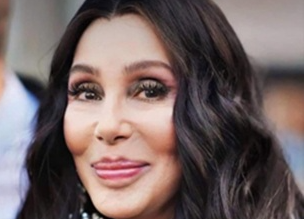
Long before royal headlines followed her everywhere and cameras captured her arriving at palace gates, Meghan Markle was simply a girl growing up in Los Angeles, trying to figure out where she fit in.
Her early life looked nothing like the glamorous image many people associate with her today. Instead, it was shaped by quiet afternoons alone after school, simple microwave dinners, and two hardworking parents doing their best to provide for their family.
Born to a Black mother and a white father, Meghan often found herself navigating questions about identity from a very young age.
“My dad is Caucasian and my mom is African American. I’m half Black and half white,” she once explained.
Those words reflected a deeper experience that influenced much of her childhood — the sense of standing between two worlds without feeling completely part of either.
As a child, Meghan described herself as what many call a “latchkey kid.” Her mother, Doria Ragland, worked as a makeup artist, while her father, Thomas Markle Sr., spent long hours working in the television industry.
Because of their demanding schedules, Meghan often returned home from school to an empty house.
“I grew up with a lot of fast food and TV tray dinners,” she once recalled.
Evenings were simple: watching television while eating microwave meals.
“Watching Jeopardy! and having a lot of microwaveable kids’ meals… that was normal.”
Her father has later challenged parts of that portrayal, suggesting that some of Meghan’s memories differ from his own. Thomas Markle has said that he often arranged transportation for her or picked her up from school himself when work allowed.
Regardless of those different perspectives, Meghan has explained that the most difficult part of her childhood wasn’t the quiet evenings or simple meals.
It was the reactions she sometimes encountered in public when she was with her mother.
Because Meghan had lighter skin, people often assumed she was white. When strangers saw her with Doria, it sometimes led to uncomfortable questions.
“I remember my mom telling me stories about going to the grocery store and a woman asking, ‘Whose child is that?’” Meghan once shared. “She would say, ‘She’s my child.’ And the person would respond, ‘No, you must be the nanny. Where’s her mom?’”
Moments like that left a lasting impact on how she understood identity and belonging.
After her parents separated, Meghan split time between both of them. When she turned nine, she began living primarily with her father while her mother focused on building her career.
She stayed with her father until she left for college at eighteen.
Meanwhile, her mother moved to a predominantly Black neighborhood outside the Valley. Though the change felt unfamiliar at first, Doria later explained that a supportive network of women helped guide Meghan during those years.
“We had a great group of women who really helped me raise Meg,” Doria said in Meghan’s Netflix series. “She was always easy to get along with… very empathetic and mature.”
Even so, their relationship had its own unique dynamic.
“I remember asking her if I felt like her mom,” Doria said. “And she told me I felt more like her older, controlling sister.”
Like many teenagers, Meghan struggled with insecurity growing up — something that was intensified by her feeling of not fitting into typical expectations.
“I was a big nerd,” she admitted. “People don’t understand that about me. I wasn’t the pretty one. My identity was wrapped up in being the smart one.”
That intelligence showed itself early.
At just eleven years old, Meghan wrote letters protesting a sexist television commercial — and successfully helped prompt the company to change the advertisement. It was an early sign of her willingness to challenge unfairness.
Despite the financial challenges her family sometimes faced, Meghan remembers small moments of joy from those years.
“I grew up on the $4.99 salad bar at Sizzler,” she once said. “I knew how hard my parents worked to afford that… and I felt lucky.”
Family outings with her Girl Scout troop were similar.
“When my troop went out for dinner, it was usually that same salad bar or The Old Spaghetti Factory — because that’s what families could afford.”
At one point, her father’s life changed significantly after winning $750,000 in the lottery. According to Meghan’s half-brother, that money helped provide access to better schools and opportunities.
“That money allowed her to go to the best schools and get the best training,” he said. “She doesn’t stop until she gets what she wants.”
Meghan’s determination appeared early in life. At eleven, she even wrote a letter to her school principal promising that one day she would make the school famous.
By the age of thirteen, she had already started working — babysitting and serving donuts at a shop called Little Orbit.
Her connection to Hollywood also began during childhood. Meghan often visited the set of the sitcom “Married… with Children,” where her father worked as a lighting director.
“A really funny and perverse place for a little girl in a Catholic school uniform to grow up,” she later joked.
Yet even as she explored acting, Meghan was still searching for a sense of identity.
“My teenage years were even worse — trying to figure out how to fit in,” she wrote later. “Being biracial, I felt somewhere in between.”
When she began pursuing acting professionally, another challenge appeared. Casting directors often struggled to categorize her.
“I wasn’t black enough for the black roles and I wasn’t white enough for the white ones.”
The pressure of trying to meet expectations followed her well into adulthood.
“It was a constant battle with myself… trying to be as cool, as smart, as everything everyone expected.”
But by her early thirties, Meghan began to see herself differently.
“I am 33 years old today. And I am happy,” she wrote at the time. “Learning how to be kind to yourself… finding happiness — that takes time.”
Soon afterward, her life changed dramatically.
She gained global recognition for her role as Rachel Zane on the television series Suits. Then, in 2016, she met Prince Harry.
Two years later, they married at Windsor Castle in a ceremony watched by millions around the world.
Their family quickly grew with the arrival of Prince Archie and Princess Lilibet.
But even after becoming a royal mother, Meghan faced deeply personal challenges.
In April 2025, during the launch of her podcast Confessions of a Female Founder, she revealed a frightening health crisis that followed childbirth.
Speaking with Bumble founder Whitney Wolfe Herd, Meghan explained that both of them had experienced postpartum preeclampsia, a rare but potentially life-threatening condition.
“We both had very similar experiences… with postpartum,” Meghan said. “We both had preeclampsia. Postpartum preeclampsia. It’s so rare and so scary.”
She described the difficulty of facing such a serious medical issue while still trying to care for her children.
“In the quiet moments, you’re still trying to show up for people — especially your children — but those things are huge medical scares.”
Whitney Wolfe Herd agreed, emphasizing how serious the condition can be.
“I mean life or death, truly.”
Not long after, Meghan revealed another deeply personal experience: a miscarriage she later described in a heartfelt essay.
Today, Meghan Markle’s story continues to evolve.
From a young girl eating microwave dinners and wondering where she belonged, to a global public figure balancing family, advocacy, and public life, her journey reflects far more complexity than a typical royal fairy tale.
With her podcast, her projects, and her family beside her, she is now telling that story in her own voice — shaped by resilience, identity, and experiences that began long before the world ever learned her name.