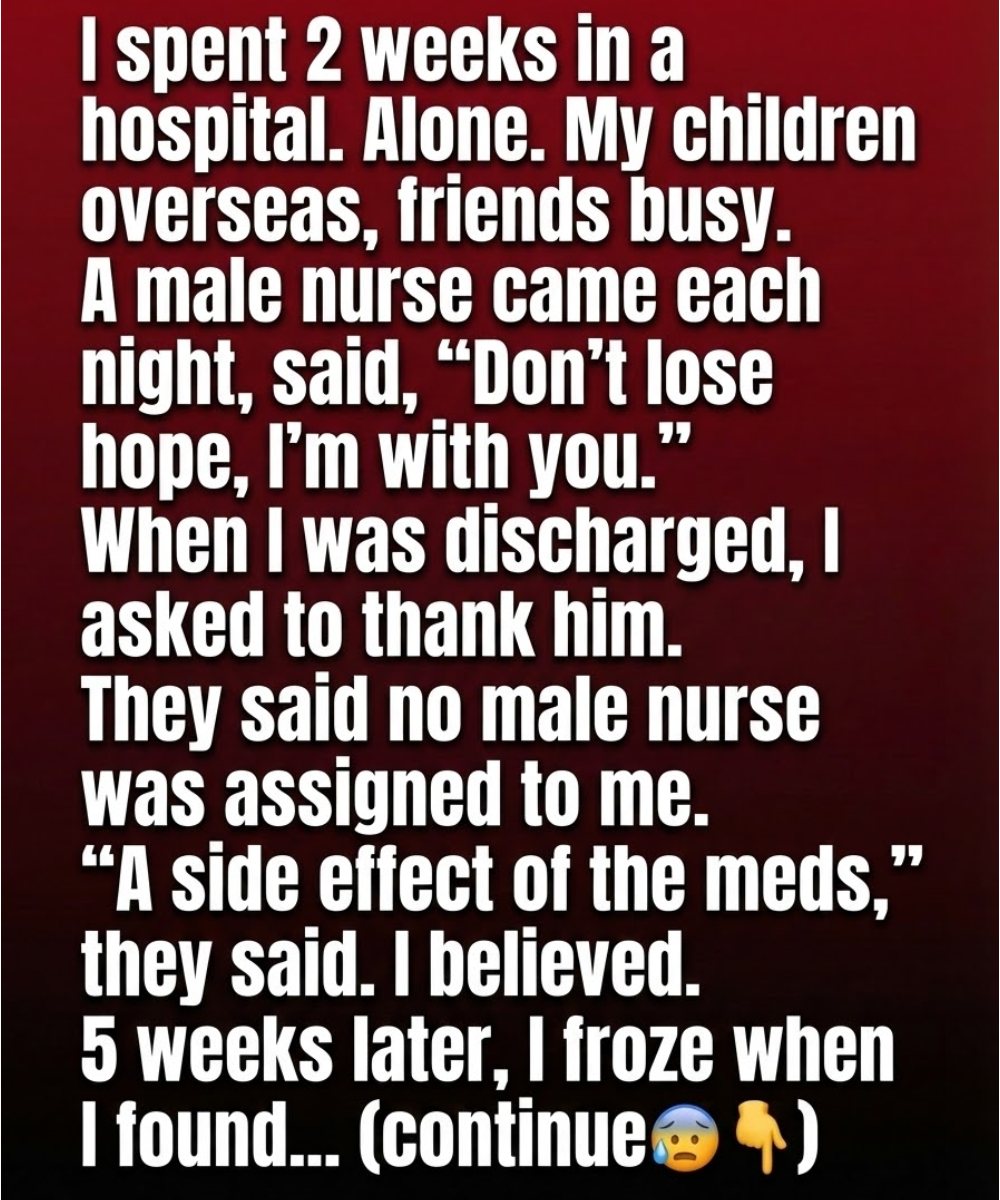
During the two weeks I spent in the hospital, silence slowly became my constant companion. It settled into the room the same way the dim hallway light did each night—quietly but completely. My children lived hours away in different cities, and although friends cared, they had their own responsibilities and routines. Most visiting hours passed with no familiar faces beside my bed.
The days blended together in the steady rhythm of medical machines and the soft footsteps of nurses moving through the corridors. But the nights were the hardest. When the ward grew quiet, every thought seemed louder. I reminded myself that recovery takes patience, yet loneliness can quietly fill even the brightest room.
Still, there was one thing I could count on every night.
Just before the hospital floor settled into its deepest quiet, a nurse would stop by my room. He never seemed rushed. He would check the monitors, adjust my blanket, and ask how I was feeling in a way that sounded genuinely sincere.
Before leaving, he always shared a few simple words.
“Try to rest.”
“Don’t lose hope.”
“You’re stronger than you think.”
They were short sentences, but in that sterile hospital room they felt surprisingly comforting. After a while, I began measuring my nights by those brief visits. They reminded me that I was more than just a patient on a chart—I was still a person.
When the day finally came for my discharge, my body felt stronger, even if my emotions were still catching up. As I packed my things, I realized I didn’t want to leave without thanking the nurse who had quietly supported me through those difficult nights.
At the front desk, I asked the staff if they could help me find him.
“I’d like to thank the nurse who checked on me every night,” I said.
The staff exchanged confused looks.
They reviewed the schedules and checked the records. After a moment, one of them explained that no male nurse had been assigned to my room during my stay. According to their logs, only female nurses had worked that section of the ward.
They suggested possible explanations—maybe the medication, exhaustion, or the mind filling in gaps during stressful moments. I nodded politely, though something about the answer didn’t sit right with me.
Weeks later, after returning home, I finally unpacked the bag I had taken with me to the hospital. While going through it, my hand caught something folded inside a small pocket.
It was a piece of paper, creased as though it had been opened more than once.
Written neatly across it was a short message:
“Do not lose hope. You are stronger than you think.”
There was no name. No date.
I sat there holding the note for a long time, thinking about those quiet late-night visits and the comfort they had brought me.
Eventually, I stopped trying to explain it.
Not every act of kindness needs a clear explanation. Sometimes encouragement appears quietly, without a visible source.
And sometimes the most important thing isn’t who offered the words—but the strength those words gave you when you needed them most.