A growing international controversy has emerged following reports that a girls’ elementary school in Iran was struck during recent military operations in the country. The incident has triggered conflicting claims about responsibility, with Donald Trump firmly denying that the United States carried out the attack.
Airstrikes and Rising Tensions
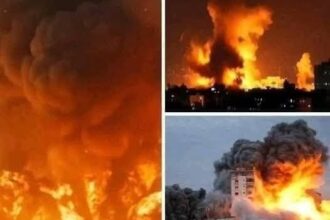
On February 28, joint military strikes by the United States and Israel targeted sites across Iran, including locations in Tehran, Isfahan, Qom, Karaj, and Kermanshah.
According to officials from both countries, the strikes were intended to destroy strategic military infrastructure and halt Iran’s alleged efforts to develop nuclear weapons. During the attacks, a compound associated with Iran’s Supreme Leader Ali Khamenei was reportedly destroyed, and Iranian authorities confirmed that Khamenei was killed.
Both Donald Trump and Israeli Prime Minister Benjamin Netanyahu defended the operation as a move aimed at ending authoritarian rule in Iran and preventing nuclear escalation.
School Strike in Minab
Amid the broader military campaign, tragedy struck the city of Minab when drones hit an all-girls elementary school during the first day of airstrikes.
Reports cited by BBC state that 175 people were killed, including 151 children aged between seven and twelve. The attack immediately drew international condemnation and intensified debate about civilian casualties during military operations.
Iranian authorities quickly accused the United States and Israel of responsibility.
Iran’s president Masoud Pezeshkian described the strike as a tragedy that would “never be erased from the historical memory of our nation.” Meanwhile, Foreign Minister Abbas Araghchi labeled the incident a “crime” against civilians.
Satellite Evidence and Military Targets
Investigations by The New York Times reportedly analyzed satellite images and online footage suggesting the school may have been struck as collateral damage during a missile attack on nearby structures.
Among the nearby facilities was a naval base operated by the Islamic Revolutionary Guard Corps. The Pentagon later confirmed that the base was located close to the school.
Such proximity between military infrastructure and civilian facilities often complicates investigations into wartime incidents, as determining the precise source of a strike can require extensive forensic and intelligence analysis.
Trump Rejects Responsibility
Questions about the school strike quickly reached the White House.
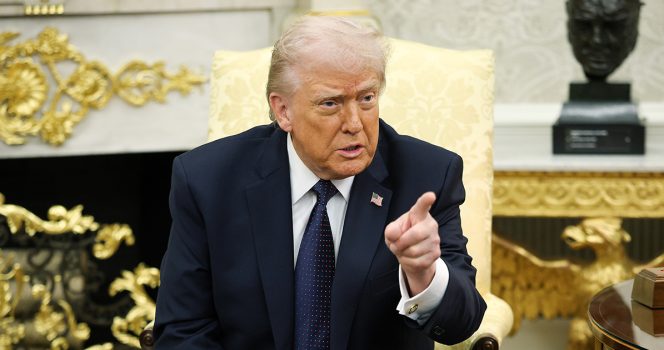
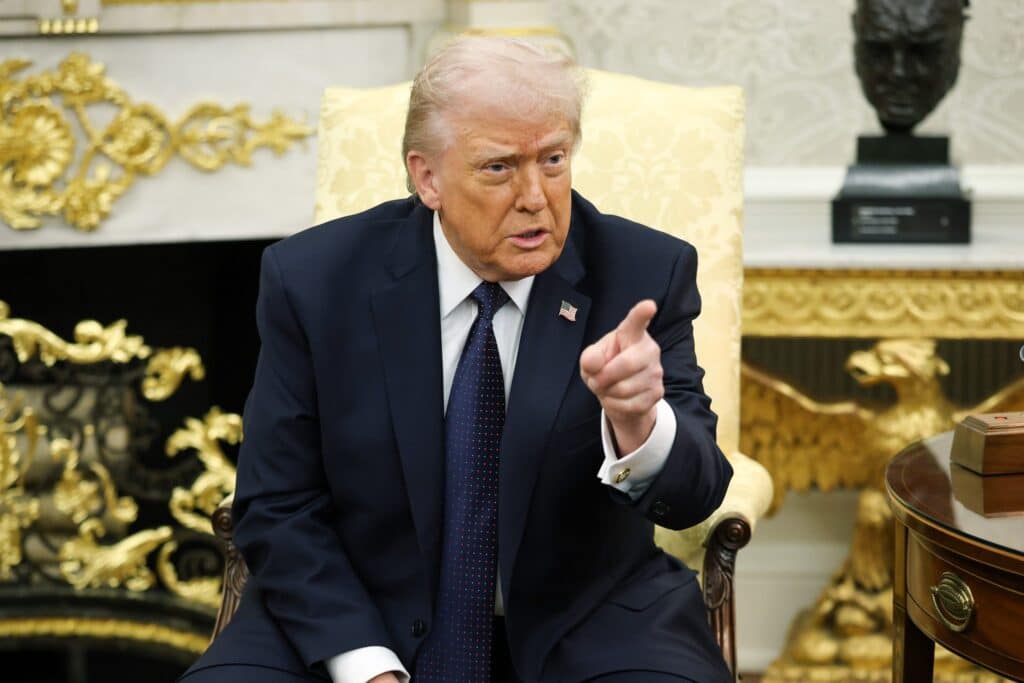
On March 8, reporters asked Donald Trump directly whether the United States had bombed the school.
Speaking to journalists while exiting Air Force One, Trump responded:
“No, in my opinion and based on what I’ve seen, that was done by Iran.”
The same reporter later asked Pete Hegseth for clarification. He stated that the situation was still under investigation but argued that Iran has historically been responsible for civilian targeting.
Trump further claimed that the incident could have resulted from inaccurate Iranian weapons systems.
“We think it was done by Iran because they’re very inaccurate with their munitions. They have no accuracy whatsoever.”
A Conflict Still Unfolding
Following the school incident, Iran launched missile strikes against military positions associated with U.S. forces across the region, including bases in Bahrain, Kuwait, Qatar, the United Arab Emirates, Jordan, and Cyprus.
As international investigations continue, the tragedy in Minab has become one of the most controversial moments of the conflict so far. The debate surrounding responsibility highlights the complexities—and human costs—of modern warfare.
Whether new evidence will clarify what happened remains uncertain, but the incident has already intensified global scrutiny of the military campaign and its consequences.