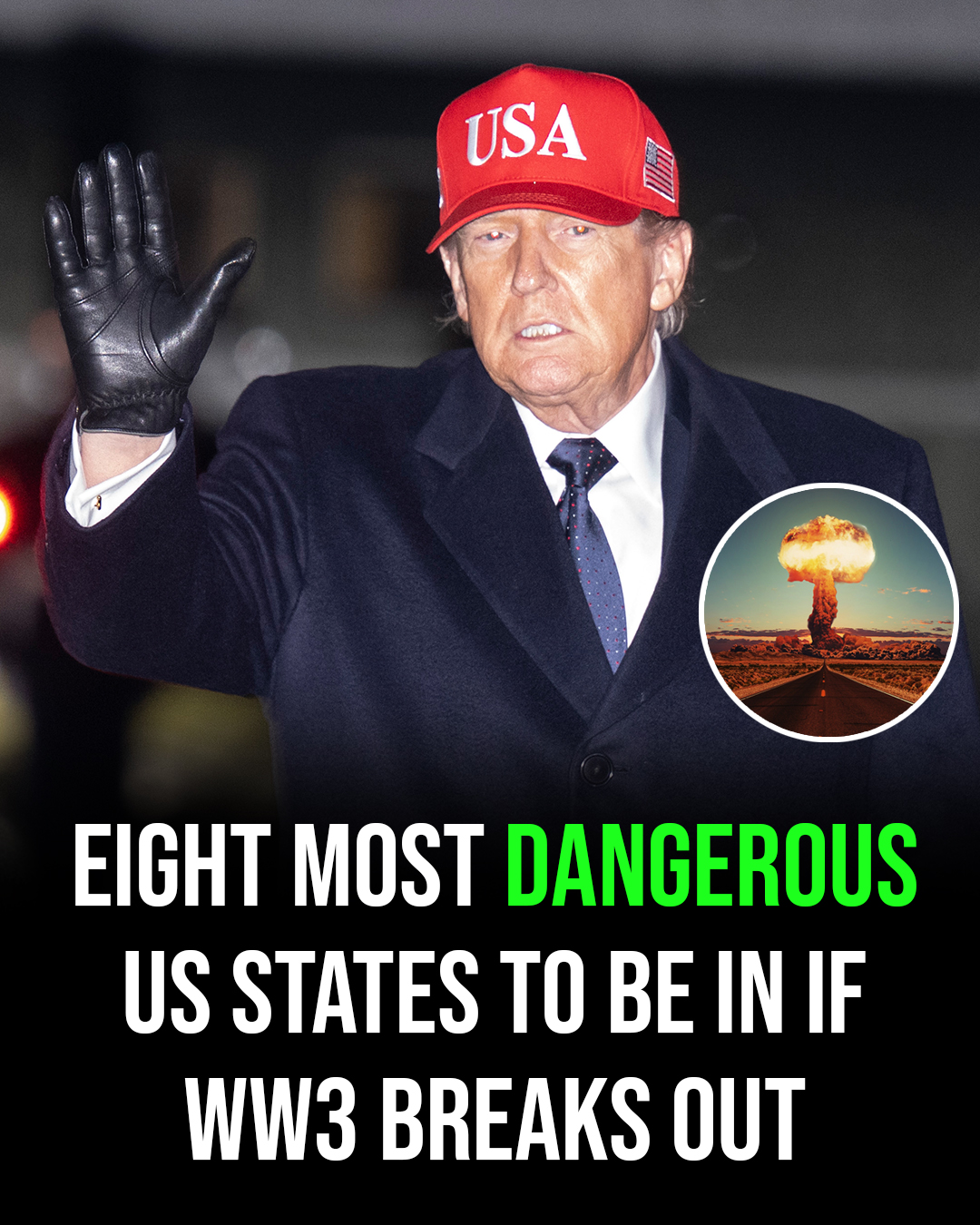
Where Could Be Safest in the U.S. if a Global War Broke Out? Experts Weigh In
Growing geopolitical tensions have prompted renewed discussions about the possibility of a large-scale international conflict. As wars and political disputes continue in various regions, many people are wondering what such scenarios could mean for everyday safety—including within the United States.
During an interview with Time, Donald Trump acknowledged that conflicts between nations always carry risks. He noted that when countries enter wars, uncertainty and the potential for loss of life are realities governments must prepare for.
His remarks came amid heightened tensions involving Iran and ongoing conflicts in multiple parts of the world.
Rising Global Concerns
In recent years, world leaders have warned that regional conflicts could escalate if diplomacy fails.
For example, Volodymyr Zelensky has previously suggested that the war sparked by Vladimir Putin’s invasion of Ukraine could have wider international consequences if tensions continue to rise.
Public opinion surveys reflect similar concerns.
A multinational poll conducted by YouGov across several European countries found that between 41% and 55% of respondents believe another global war could occur within the next decade. In the United States, about 45% of Americans said they think a major conflict is possible in the coming years.
One of the biggest fears connected to such a scenario is the potential use of nuclear weapons. In the same survey, between 68% and 76% of participants said they believe nuclear arms would likely be used if a global war occurred.
Countries Often Mentioned as Relatively Stable
When people discuss potential safe locations in large-scale conflicts, certain countries are frequently mentioned because of their history of neutrality.
These include:
-
Switzerland
-
Ireland
-
Austria
Their long-standing neutral policies sometimes place them in conversations about relative stability during global crises.
However, analysts stress that modern warfare—especially with advanced long-range technology—can affect areas far from traditional battlefields.
Safety Within the United States
Within the U.S., researchers say geography could influence risk levels in certain military scenarios.
Analysis referenced by Newsweek suggests that regions farther from major strategic military installations might face a lower likelihood of being immediate targets in some theoretical scenarios.
States often mentioned in these discussions include parts of the Northeast and Southeast, such as:
-
Maine
-
New Hampshire
-
Vermont
-
Massachusetts
-
Rhode Island
-
Connecticut
-
New York
-
New Jersey
-
Pennsylvania
-
Delaware
-
Maryland
-
Virginia
-
West Virginia
-
North Carolina
-
South Carolina
-
Georgia
-
Florida
Some Midwestern states are also occasionally included in modeling studies depending on the specific scenario being examined.
Regions Considered Strategically Sensitive
Other areas of the United States host important military infrastructure that forms part of the nation’s nuclear deterrence system.
States such as:
-
Montana
-
Wyoming
-
Colorado
-
Nebraska
-
South Dakota
-
North Dakota
-
Iowa
-
Minnesota
contain or lie near intercontinental ballistic missile (ICBM) silo fields.
In a hypothetical nuclear conflict, these installations could be considered strategic targets because disabling them might limit an opponent’s ability to launch retaliatory strikes.
Why Experts Say No Place Is Completely Safe
Despite these discussions, defense specialists emphasize that predicting safe areas during a global war is extremely difficult.
Modern warfare could involve attacks on many types of targets, including:
-
Major cities
-
Military bases
-
Communication networks
-
Energy infrastructure
-
Transportation systems
With thousands of nuclear weapons still existing worldwide, analysts agree that no single location can be guaranteed safe in a large-scale nuclear conflict.
Final Thoughts
Although conversations about global conflict can raise understandable concerns, experts stress that these discussions are primarily about preparedness and risk analysis—not predictions.
Diplomacy, international cooperation, and conflict prevention remain the primary strategies used by governments and global organizations to reduce the likelihood of large-scale war.
💬 What are your thoughts on global security and preparedness?