Share
As fighting intensified between Iran, the United States, and Israel, the diplomatic arena became nearly as charged as the battlefield. At an emergency session of the United Nations Security Council, sharp words replaced missiles — but the stakes were no less serious.
Iran’s ambassador to the UN delivered a forceful condemnation of recent U.S. and Israeli airstrikes, calling them unlawful and asserting Tehran’s right to self-defense under international law. The exchange made clear that this crisis is unfolding on two fronts: military escalation and legal confrontation.
Airstrikes and a Shock to Regional Leadership
According to official announcements on February 28, 2026, the United States and Israel conducted coordinated air and missile strikes targeting Iranian military infrastructure and leadership compounds in Tehran and other locations.
Iranian state media reported that Supreme Leader Ayatollah Ali Khamenei was killed in the attacks — a development that, if confirmed independently, would mark one of the most consequential targeted strikes in modern Middle Eastern history. The scale of the operation was described by regional analysts as among the most ambitious directed at Iranian targets in decades.
The U.S. administration framed its role in the campaign as a defensive measure aimed at preventing Iran from advancing toward nuclear weapon capability and neutralizing missile threats. In public statements, President Donald Trump declared that Iran would “never have a nuclear weapon” and warned of further action if hostilities continued.
Supporters of the operation argue that decisive action was necessary to prevent a greater threat. Critics counter that the move risks triggering a cycle of retaliation that could spiral beyond control.
Iran’s Retaliation and Legal Claims
Following the strikes, Iran announced missile and drone attacks targeting Israeli territory and U.S. military installations in the region. Iranian officials described their response as lawful under Article 51 of the UN Charter, which recognizes a nation’s right to self-defense if attacked.
In highly charged rhetoric, senior Iranian leaders condemned U.S. and Israeli leadership in blunt terms and vowed continued retaliation if what they describe as violations of sovereignty persist.
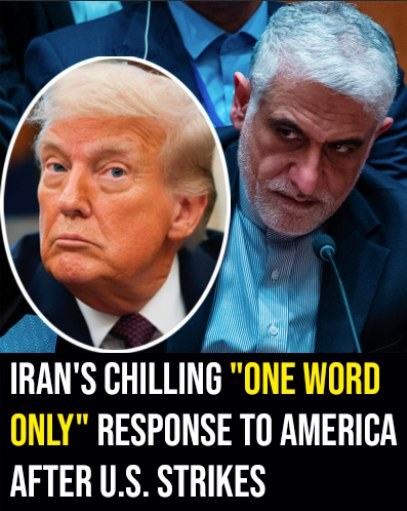
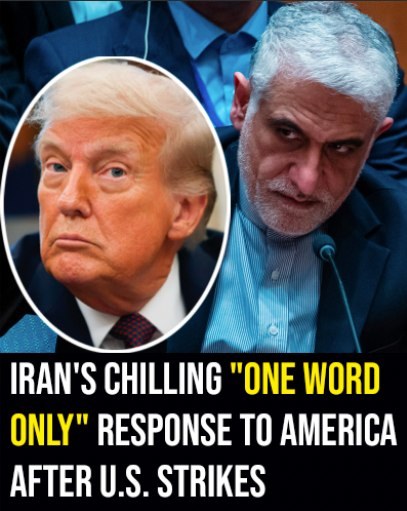
At the Security Council, Iran’s ambassador, Amir Saeid Iravani, labeled the strikes a breach of Article 2 of the UN Charter, which prohibits the use of force against the territorial integrity or political independence of a state without Security Council authorization or legitimate self-defense grounds. He described the operation as “premeditated aggression” and rejected claims of imminent threat as legally unfounded.
While such accusations reflect Iran’s official position, no international court has yet adjudicated the legality of the strikes.
The U.S. Defense at the United Nations
The U.S. ambassador responded by portraying Iran’s government as a longstanding destabilizing force in the region. He referenced Iran’s support for proxy militias and prior attacks on U.S. forces as part of the justification for defensive action.
American officials maintain that the strikes fall within interpretations of anticipatory self-defense — a doctrine debated among international law scholars. The central dispute revolves around what qualifies as an “imminent threat” and whether preemptive force can be lawful without explicit Security Council approval.
These are not new debates. They have surfaced repeatedly in modern conflicts, often without clear global consensus.
The Secretary-General’s Warning
UN Secretary-General António Guterres addressed the chamber with visible urgency. He warned that rapid escalation poses a grave threat to international peace and security and stressed that violations of international law — whether initial strikes or expansive retaliation — risk weakening the global rules-based system established after World War II.
He urged all sides to pursue de-escalation and dialogue, emphasizing that there is no viable alternative to peaceful settlement of disputes.
His remarks reflected a broader concern: once military action begins, diplomacy becomes more difficult, not less necessary.
Nuclear Tensions and Diplomatic Breakdown
The crisis emerged amid already fragile nuclear negotiations between Washington and Tehran. In the months prior, intermittent talks had attempted to address concerns over Iran’s nuclear program. Critics argue that the shift from negotiation to military confrontation may have closed diplomatic avenues that were still partially open.
The White House maintains that action was required to prevent an imminent nuclear threat, though publicly available evidence regarding timelines and capabilities remains limited.
In conflicts involving nuclear-adjacent concerns, perception often carries as much weight as proof. Misjudgment in either direction can alter strategic calculations dramatically.
Why the UN Debate Matters
At its core, the clash at the United Nations centers on a fundamental question: when is the use of force justified under international law?
Article 2 of the UN Charter sets a high threshold. Article 51 provides an exception for self-defense. Between those provisions lies a contested space where political judgment, intelligence assessments, and legal interpretation intersect.
The UN’s challenge is structural. Permanent members of the Security Council hold veto power, making unified enforcement difficult when major powers are involved. As a result, debates over legality often unfold without immediate resolution.
Still, the forum matters. Even when it cannot halt conflict instantly, it shapes global opinion, records official positions, and preserves diplomatic channels that may later prove essential.
Escalation or Restraint?
Public statements from both Washington and Tehran suggest the possibility of continued confrontation. Military planners, diplomats, and regional governments are now weighing whether deterrence will stabilize the situation — or whether retaliation will widen it.
History shows that escalation can accelerate rapidly when rhetoric hardens. It also shows that adversaries have stepped back from the brink before, sometimes at the last moment.
The deeper concern many observers share is not only about battlefield outcomes, but about leadership judgment under pressure. In moments of high tension, restraint becomes an act of strength.
A Crisis with Global Consequences
The sharp exchange at the United Nations reflects more than diplomatic theater. It reveals profound disagreements over sovereignty, international norms, and the boundaries of preventive force.
Behind the speeches and strategic messaging are ordinary civilians across the region who bear the human cost of instability. Markets fluctuate, families fear displacement, and neighboring countries prepare for spillover.
In times like these, clarity matters. So does caution.
The world is watching to see whether this confrontation deepens into prolonged warfare or bends back toward negotiation. The path chosen will shape not only regional security, but the credibility of international law and the resilience of global diplomacy for years to come.