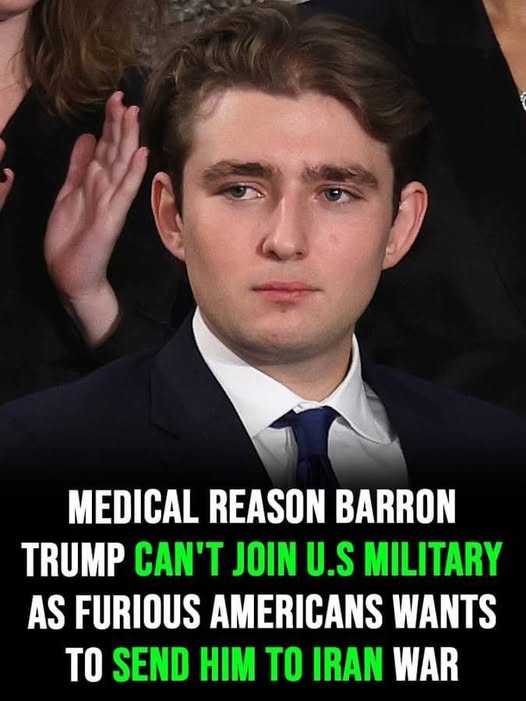
The digital landscape of early 2026 has been set ablaze by the viral emergence of the hashtag #SendBarron, a trend that has rapidly transcended mere social media noise to become a lightning rod for a much deeper, more visceral American grievance. While the surface-level target of the movement is Barron Trump, the youngest son of the President, the underlying current is one of profound public fury regarding the escalating military tensions with Iran. This movement reflects a historic and recurring wound in the American psyche: the perceived chasm between the political elites who authorize the machinery of war and the ordinary citizens whose families bear the physical and emotional costs of that conflict. As the Persian Gulf teeters on the brink of a broader conflagration, the demand for shared sacrifice has moved from the fringes of political discourse to the absolute center of the national conversation.
For many Americans, the focus on Barron Trump is not an attack on a teenager, but a symbolic critique of a system that often appears to insulate the powerful from the consequences of their own foreign policy decisions. The outcry touches on a familiar sense of betrayal that has resonated since the Vietnam era—a feeling that those who beat the drums of war rarely have skin in the game. Critics are increasingly asking why the families of leaders remain shielded from the very dangers their policies create, while middle-class and working-class homes across the country brace for the potential of another generation of soldiers being sent into harm’s way. This sentiment has been amplified by the current administration’s aggressive posture toward Tehran, leading to a raw and personal backlash that the White House has struggled to quiet.
The controversy has inevitably resurrected long-standing resentments regarding Donald Trump’s own history with military service. During the 1960s, the elder Trump received multiple student deferments followed by a pivotal medical exemption for bone spurs, which ultimately precluded his service in the Vietnam War. Today, social media sleuths and political opponents are drawing direct parallels between the past and the present. Reports have begun to circulate suggesting that Barron’s extraordinary physical stature—he stands well over six and a half feet tall—could ironically serve as a basis for a medical disqualification. While the military does have height restrictions for various branches and specialized roles (such as pilots or tank crews), the public perception is that a new “bone spur” narrative is being constructed to ensure the President’s son remains far from the front lines.
This domestic unrest is unfolding against a backdrop of extreme regional instability. The Middle East is currently reeling from unverified but persistent reports concerning the death of Ayatollah Ali Khamenei. The potential power vacuum in Iran has fueled fears of a spiraling conflict with no clear exit strategy, making the stakes of American military involvement feel more immediate and more permanent. In this high-pressure environment, the #SendBarron trend serves as a pressure valve for a citizenry that feels its voice has been drowned out by the rhetoric of high-level geopolitics. The demand is simple, if rhetorically sharp: if the mission is vital enough for the nation, it should be vital enough for the sons of the architects of that mission.
The disparity in sacrifice has become a focal point for a broader frustration regarding accountability. Political analysts note that the insulation of the elite has been a growing concern since the end of the draft and the transition to an all-volunteer force. When the children of the decision-makers do not serve, the threshold for military intervention can feel lower, as the personal stakes for those in the Situation Room are diminished. Critics argue that military action carries irreversible consequences for ordinary families—missed birthdays, life-altering injuries, and empty chairs at dinner tables—while the political class remains protected by the very institutions they manage. This perceived lack of “mutual skin in the game” has turned Barron Trump’s name into a shorthand for a much larger argument about the ethics of modern warfare.
Furthermore, the health and physical readiness of the Trump family have become subjects of intense public scrutiny. Just as recent images of the President at a Medal of Honor ceremony sparked health speculation, the physical attributes of his youngest son are being dissected through a lens of military eligibility. The discourse has moved beyond policy into the realm of biology and privilege. Whether Barron is actually disqualified by height or any other medical condition is, in many ways, secondary to the symbolic power of the hashtag. It represents an unwillingness to be silenced and a rejection of the “do as I say, not as I do” philosophy that many feel has defined American leadership for decades.
As the situation in the Persian Gulf remains volatile, the demand for shared sacrifice is unlikely to fade. The sentiment reflected in #SendBarron is a testament to the enduring American belief in fairness—the idea that if the country goes to war, the burden must be carried by the many, not just the few. Regardless of whether Barron Trump ever dons a uniform, his name has become an involuntary curator of a persistent national wound. The anger is no longer just about a specific policy toward Iran; it is about the fundamental social contract between the government and the governed.
In the coming weeks, the administration will likely face continued pressure to address these concerns, especially as more troops are deployed to the region. The White House has characterized the trend as a “mean-spirited” attack on a private citizen, but for the millions participating in the discourse, it is a necessary confrontation with the reality of class-based military service. The American public is signaling that they are no longer content to watch from the sidelines while their children are sent into a conflict with no clear resolution, while the halls of power remain untouched by the grief of war.
Ultimately, the story of #SendBarron is a story of a nation in search of its conscience. It is a reminder that in a democracy, the true cost of war should be felt equally by all, from the smallest town to the grandest residence in the capital. As 2026 continues to lurch through these crises, the demand for accountability and shared risk will remain a grounding force against the noise of escalating conflict. The sentiment of this movement will persist as long as the disparity between the powerful and the powerless remains a defining feature of the American experience.