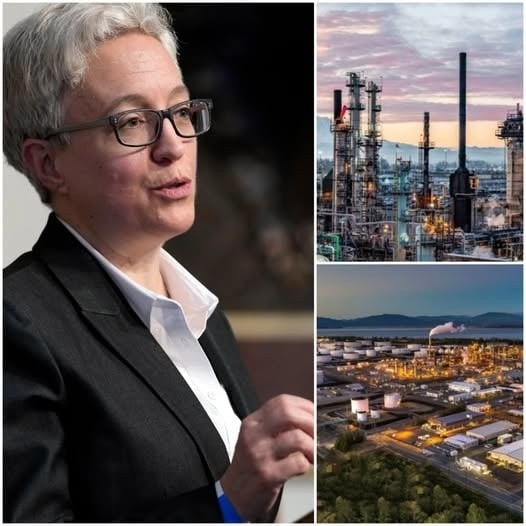
The State of Oregon finds itself perched on the edge of a looming energy precipice, its entire fuel supply chain vibrating with a fragility that has caught the attention of economists, legislators, and every citizen who relies on a functioning gas pump. The catalyst for this burgeoning crisis is a series of strategic corporate maneuvers by energy giant Phillips 66, which has made it explicitly clear in recent regulatory filings that it is moving to divest upwards of $3 billion in refinery assets. While corporate restructuring is common in the global energy sector, the specific assets on the chopping block—most notably the Ferndale refinery in Washington state—represent a direct threat to the stability of the Pacific Northwest. For Oregon, a state with zero refineries of its own, the Ferndale facility is not just another industrial plant; it is the single most critical source of gasoline and diesel for the Portland metropolitan area and the vast rural expanses of the state.
This alarm follows a chilling precedent set in late 2024. In December of that year, Phillips 66 abruptly announced the permanent shutdown of its Los Angeles refinery, a massive facility capable of processing 139,000 barrels of crude oil per day. That decision erased a significant portion of the West Coast’s refining capacity overnight, tightening an already constricted market and sending shockwaves through the regional economy. Now, with the Ferndale refinery positioned firmly in the crosshairs of divestiture, the potential for a secondary, even more localized supply shock is becoming a mathematical certainty. Energy analysts, trucking associations, and rural community leaders are sounding the alarm with increasing urgency. They point to a terrifying trifecta of vulnerabilities: Oregon has no internal refining capability, it lacks a meaningful secondary import route for finished fuels, and it maintains a storage cushion of only 10 to 15 days—barely half the national average.
To understand why a refinery sale in Washington sends such a deep shiver through Oregon, one must look at the geography of the region’s energy infrastructure. Oregon is essentially an island at the end of a very long and very thin straw. Nearly 100% of the state’s demand—which averages approximately 100,000 barrels of gasoline and diesel every single day—is met by fuel flowing through a single, aging 400-mile lifeline known as the Olympic Pipeline. This critical artery carries refined petroleum products south from five specific refineries located in Washington: BP Cherry Point, Phillips 66 Ferndale, Marathon Anacortes, Shell Puget Sound, and U.S. Oil Tacoma. This pipeline terminates at the storage terminals in Portland, from which fuel is trucked to the rest of the state.
The fragility of this “fragile artery” was laid bare during a brief maintenance shutdown in September 2025. What was meant to be a routine pause in flow resulted in immediate economic consequences. Within hours of the pumps stopping in Washington, gas prices in Oregon began to spike. AAA Oregon reported a surreal scene where station owners were forced to scramble for inventory, and many began rationing fuel as panic buying set in among the public. This incident served as a stress test for the state’s reserves, and the results were failing. Oregon’s razor-thin storage cushion means that any sustained disruption—whether caused by mechanical failure, a regulatory hurdle, or a change in ownership that leads to a temporary or permanent shutdown of a key refinery like Ferndale—risks running the state dry in less than a fortnight.
The implications for Oregon’s economy are profound. The trucking industry, which serves as the backbone for the state’s massive agricultural and timber sectors, is particularly vulnerable. In rural Oregon, where the distance between towns is measured in hours rather than minutes, the availability of diesel is a matter of survival. If a refinery like Ferndale goes offline or reduces its output during a transition of ownership, the resulting “fuel desert” could paralyze the transport of goods, drive up the cost of food, and leave emergency services stranded. The Governor’s office has been forced to confront the reality that Oregon has historically neglected its energy security in favor of other policy priorities, leaving it at the mercy of out-of-state corporate boardrooms.
Energy experts suggest that the divestiture of Ferndale might not lead to an immediate shutdown, as a new buyer could theoretically continue operations. However, the transition period is fraught with risk. New owners often implement “optimization” strategies that can involve temporary closures for retooling or shifts in product yields that don’t align with Oregon’s specific environmental mandates. Furthermore, the broader trend among major oil companies is to pivot away from West Coast refining altogether due to high regulatory costs and shifting political climates. This “refinery flight” leaves states like Oregon in a permanent state of precariousness, dependent on a shrinking number of facilities and a single pipeline that is decades old.
The lack of a “Plan B” is perhaps the most concerning aspect of the current situation. While some have suggested increasing fuel imports via the Port of Portland, the infrastructure to handle large-scale shipments of finished gasoline and diesel is not currently equipped to replace the volume provided by the Olympic Pipeline. Expanding storage capacity is another potential solution, but such projects face significant environmental and NIMBY (Not In My Backyard) opposition, and they take years to permit and build. Oregon is currently caught in a squeeze play between its immediate need for fossil fuels and a long-term goal of transitioning to renewable energy, with the transition period proving to be more dangerous than anticipated.
As the March 2026 corporate filings confirm the divestiture timeline for Phillips 66, the political pressure on the Oregon state government is mounting. There are growing calls for the state to mandate minimum fuel reserve levels, similar to the Strategic Petroleum Reserve at the federal level, but for refined products. Critics, however, argue that the cost of maintaining such a reserve would be passed directly to consumers at the pump, which is a difficult sell in an era of persistent inflation. Meanwhile, the trucking associations are pushing for guaranteed access to fuel during “emergency” declarations, though who gets priority in a state-wide shortage remains a contentious issue.
In the short term, the eyes of the Pacific Northwest remain fixed on the Ferndale refinery. The facility is not just a collection of pipes and cracking units; it is the heartbeat of Oregon’s daily motion. The corporate move by Phillips 66 to offload $3 billion in assets might look like a savvy balance-sheet maneuver in Houston or New York, but on the ground in Portland, Salem, and Eugene, it looks like a threat to the very underpinnings of society. The 10-to-15-day storage window is a ticking clock that starts the moment the flow from Washington falters.
Ultimately, Oregon’s fuel crisis is a wake-up call regarding the hidden dependencies of modern life. The state’s reliance on a single pipeline and a handful of out-of-state refineries has created a “just-in-time” energy model that leaves no room for error. As the divestiture process moves forward, Oregonians are left to hope that the market finds a stable path forward, or that the state can find a way to thicken its “fragile artery” before it finally snaps under the pressure of corporate shifts and aging infrastructure.