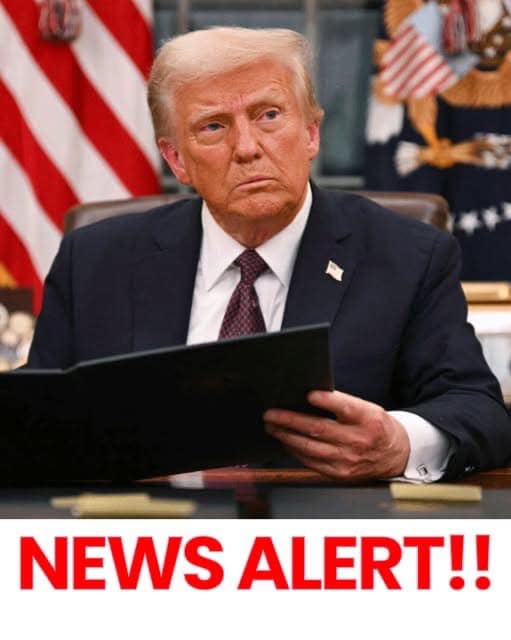
In the early days of 2025, a significant policy shift emerged from the White House that has profoundly altered the landscape of American higher education and international diplomacy. In what the administration characterized as a decisive strike against rising anti-Semitism, President Donald Trump signed an executive order in late January—shortly after his second inauguration—targeting international students and foreign nationals involved in pro-Palestinian demonstrations. This directive, which carries the weight of federal immigration enforcement, authorizes the identification and potential deportation of non-citizen students whose protest activities are perceived as supportive of “jihadist” ideologies or designated terrorist organizations, specifically Hamas.
The move, described by some as “the student deportation campaign,” represents a stark escalation in the federal government’s role in managing campus political speech. By leveraging the 1952 Immigration and Nationality Act, the administration argues it has the authority to revoke the visas of any resident aliens who “endorse or espouse” terrorist activities. Given that Hamas has been a U.S.-designated foreign terrorist organization since 1997, the administration contends that students participating in rallies that utilize certain pro-Palestinian slogans or imagery are effectively signaling support for terrorism, thereby violating the terms of their stay in the United States.
The Mechanism of Enforcement: “Extreme Vetting” on Campus
The implementation of this order has introduced a new era of “extreme vetting” within the university system. Federal agencies, including the Department of State and the Department of Homeland Security (DHS), have been directed to collaborate with campus administrations to monitor and report on the activities of international students. According to reports from early 2026, the administration has utilized advanced screening methods, including the review of public social media accounts, to identify students who have participated in campus encampments or high-profile rallies.
One of the most controversial aspects of this enforcement strategy is its reliance on the International Holocaust Remembrance Alliance (IHRA) definition of anti-Semitism. This definition, which includes certain types of criticism of the State of Israel as examples of anti-Semitic intent, has become the federal benchmark for identifying “perpetrators of unlawful anti-Semitic harassment.” By codifying this definition into an executive order, the administration has created a legal framework where political activism against Israeli policy can be classified as a deportable offense for non-citizens.
A Year of Legal Warfare and Academic Anxiety
The fallout from these directives was immediate and widespread. By the spring of 2025, organizations such as the American Association of University Professors (AAUP) and the Middle East Studies Association had filed significant legal challenges, arguing that the policy constitutes an “ideological deportation” program that violates the First and Fifth Amendments. These lawsuits contend that while the government has broad discretion over immigration, it cannot use that power to punish speech that would be protected if uttered by a U.S. citizen.
In a landmark ruling in September 2025, a federal judge in Massachusetts issued a scathing opinion against the administration, emphasizing that international students possess “unequivocal” rights to free expression while on American soil. This ruling led to a temporary halt in some deportations and the restoration of several thousand canceled visas. However, the administration has continued to push forward with other measures, including the “one-strike” policy introduced by Secretary of State Marco Rubio, which suggests automatic revocation for any non-citizen deemed to have broken any law during a protest, regardless of the severity.
The Institutional Squeeze: Funding and Compliance
The pressure is not only on the students but also on the institutions that host them. In a move that observers have called “financial extortion,” the administration has moved to freeze federal research grants for universities that it deems have failed to protect Jewish students or have allowed “pro-jihadist” encampments to persist. Columbia University, for instance, reportedly faced the freezing of nearly $400 million in federal funds before reaching a settlement with the government that included the formal adoption of the IHRA definition of anti-Semitism.
Harvard University has faced even stricter scrutiny, including the revocation of its certification under the Student and Exchange Visitor Program (SEVP) in May 2025—a move that would have effectively barred the university from enrolling any international students. While this specific action was stayed by the courts, it signaled the administration’s willingness to use “nuclear options” to force compliance with its ideological and security standards.
The Global Ripple Effect
As of early 2026, the impact on international enrollment is tangible. The combination of visa revocations, the suspension of new student visa interviews during the peak summer window of 2025, and the general atmosphere of uncertainty has led to a significant decline in applications from certain regions. Prospective students from the Middle East, North Africa, and Central Asia increasingly view the U.S. as a high-risk destination for education, where a single political act could result in the permanent loss of their academic and professional future.
The administration’s “student deportation campaign” is also part of a broader, more restrictive immigration strategy. This includes the expansion of travel bans to 19 countries—effective January 1, 2026—and the implementation of a $100,000 fee on H-1B visas for certain employers, a move designed to prioritize American workers but which has further complicated the pathway for international graduates to remain in the country.
Conclusion: A Redefined Academic Sanctuary
The events of the past year have fundamentally redefined what it means to be an international student in the United States. The “journey to knowledge” that Magfeeds and other educational platforms often champion has become a path fraught with legal and political landmines. While the administration maintains that these measures are necessary to ensure national security and combat a genuine rise in campus anti-Semitism, critics argue that the cost is the erosion of the very principles of free inquiry and democratic debate that once made American universities the envy of the world.
As the legal battles continue into 2026, the ultimate fate of this executive order remains in the hands of the higher courts. For now, the “News Alert” remains clear: the hesitation is over, the decisions have been made, and the “unprecedented steps” taken by the administration have created a high-stakes environment where the boundaries of speech and the right to remain in the country are more closely linked than ever before.