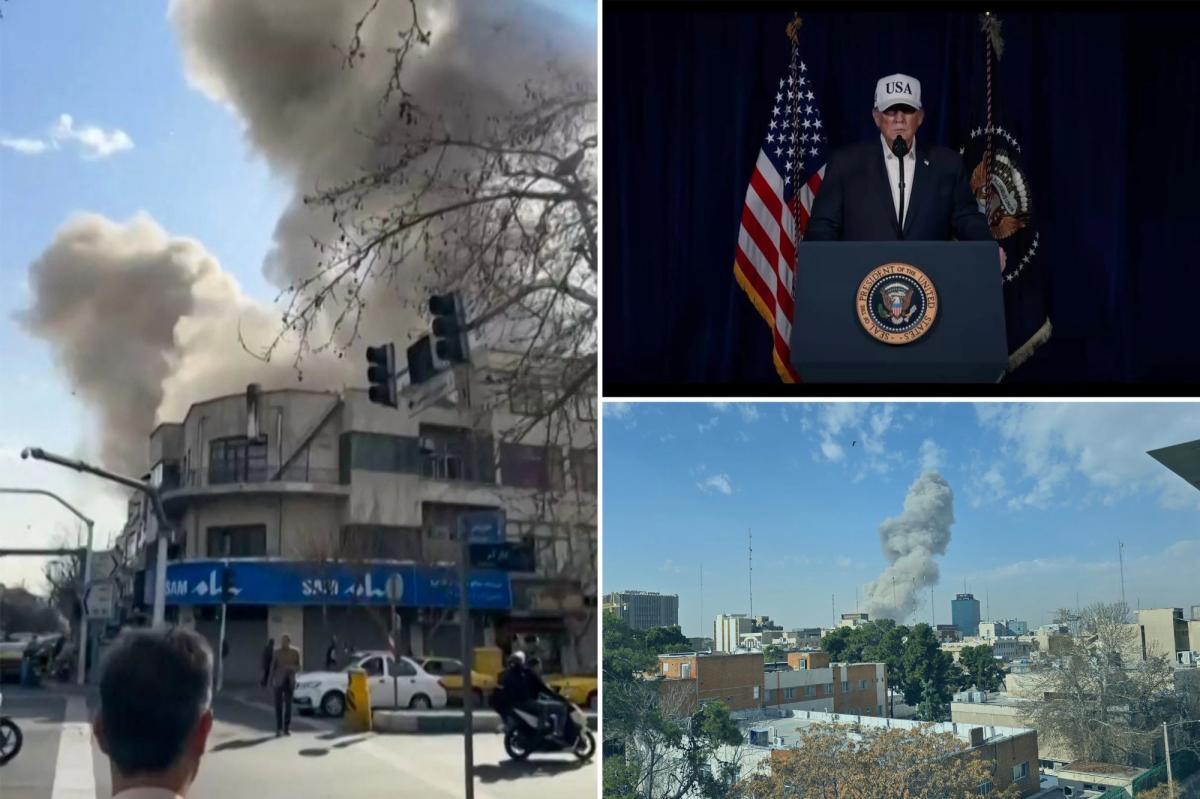
Washington / Jerusalem / Tehran — The United States and Israel carried out coordinated military strikes on Iranian targets early Saturday, triggering one of the most serious escalations in the region in years.
Explosions were reported in multiple locations across Iran, including areas believed to house military and strategic facilities. Israeli officials described the operation as a pre-emptive strike aimed at neutralizing what they called an “imminent threat” linked to Iran’s missile and nuclear infrastructure.
President Donald Trump addressed the nation shortly after the strikes, calling the operation “major combat action” and issuing a direct warning to Tehran.
“Lay down your arms, or you will face certain death,” Trump said, urging Iranian leadership to stand down. He also called on the Iranian people to demand change from their government.
Iranian state media confirmed the attacks and vowed a “decisive and powerful response.” Officials in Tehran labeled the strikes a violation of international law and warned that retaliation would follow.
Regional Tensions Surge
Airspace disruptions were reported across parts of the Middle East as airlines diverted flights and several countries issued travel advisories. Schools and public institutions in parts of Iran were temporarily closed amid security concerns.
Global reactions were swift. Russia condemned the operation as an act of aggression, while several European leaders called for immediate de-escalation to prevent a wider regional conflict.
What Happens Next?
Analysts warn that the situation could escalate rapidly if Iran retaliates directly against U.S. or Israeli targets, potentially drawing in regional allies and expanding the conflict beyond its current scope.
Military forces across the region are reportedly on heightened alert as diplomatic channels attempt to contain further escalation.
This is a developing story. Updates will follow as more information becomes available.