The modern era is defined by a relentless pursuit of the “quick fix.” From viral weight-loss trends to financial schemes promising overnight wealth, our culture is saturated with formulas that offer rapid transformation with minimal effort. This desire for efficiency is a natural human trait, but in 2026, it has become a vulnerability that sophisticated scammers and manipulators exploit with surgical precision. Genuine wisdom, however, is rarely found in a simplified answer or a frantic shortcut. It is a quiet, enduring force that emerges through the slow accumulation of lived experience, the humility of reflection, and the persistent courage to question one’s own assumptions. To protect oneself in an increasingly deceptive world, one must trade the lure of the “easy way” for the grounded strength of independent thought.
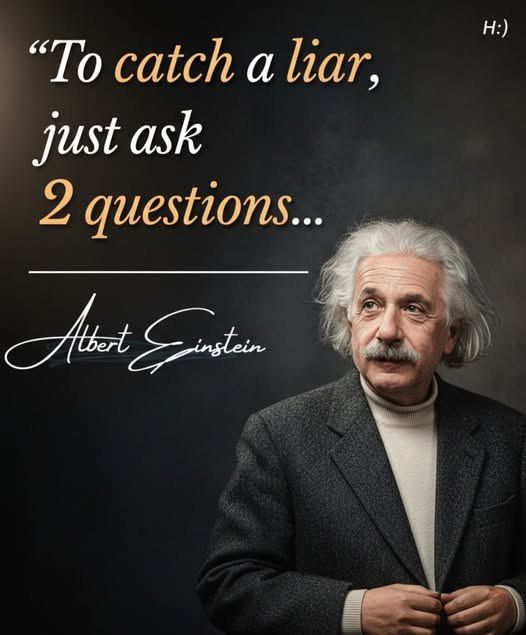
The intellectual principles often associated with Albert Einstein remain relevant today not because they are impenetrable equations, but because they champion the sanctity of the individual mind. In a world drowning in persuasive voices, targeted advertisements, and constant digital noise, the capacity to think clearly is no longer just an academic pursuit; it is a vital form of personal protection. When we stop to reflect, we build an inner compass that allows us to navigate complexity without losing our moral or intellectual balance. This self-awareness acts as a firewall against the emotional urgency that most scams rely on. By understanding our own desires and triggers, we become less susceptible to those who would use them against us.
Progress, much like the act of riding a bicycle, is a matter of equilibrium maintained through forward motion. It is a mistake to confuse stagnation with comfort. While staying in one place might feel safe, it is often a disguise for a deepening dissatisfaction that leaves us rigid and brittle. Growth requires a steady commitment to learning and an openness to revising our beliefs when new evidence presents itself. This intellectual flexibility is our greatest guard against manipulation. Those who refuse to update their views become predictable, and predictability is exactly what a manipulator needs to succeed. Conversely, those who evaluate ideas thoughtfully and are willing to say “I was wrong” remain difficult to influence. Movement in life does not need to be frantic or loud; it must simply be intentional. Deliberate advancement, guided by calm reflection rather than impulsive reaction, is what sustains true equilibrium.
Furthermore, we must recognize the role of imagination in the architecture of a secure life. While facts and data provide the necessary structure for our decisions, creative thinking is what allows us to connect those dots and generate alternatives. Intelligence is not merely a storage facility for information; it is the inventive application of that knowledge to real-world problems. Imagination allows us to reframe obstacles as challenges and to view mistakes as necessary feedback loops. When failure is examined honestly, it ceases to be a source of shame and becomes a source of instruction. Most of what we call “experience” is simply the refined result of errors that were analyzed rather than ignored. With discipline, imagination fuels resilience and innovation, ensuring that we are growing rather than merely drifting into fantasy.
Maintaining an open mind is a practical defense mechanism against deception and prejudice. We often prize quick judgments because they feel efficient, but speed in judgment usually comes at the cost of context. Intellectual humility—the recognition that our knowledge is inherently incomplete—invites a deeper understanding that protects us from being fooled by surface-level appearances. Manipulation frequently exploits a sense of artificial urgency, forcing us to act before we can think. By simply pausing to question motives and verify the consistency of a story, we disrupt the power of the deceiver. Clear thinking is the art of balancing skepticism with fairness; it allows us to guard against misinformation without hardening into a cynical person who believes in nothing.
In the end, the value of a life is measured by contribution rather than status. In the digital age, we are often tempted to prioritize how we appear over who we actually are. Titles, trends, and social standing are fleeting, but a meaningful impact on the lives of others endures. By asking whether our actions add genuine value rather than merely enhancing our public image, we foster a sense of integrity that is difficult to shake. Simplicity has a way of clarifying our priorities, and a sustained curiosity ensures that we never stop being students of the world. Exposure to diverse perspectives is not just a social grace; it strengthens our discernment and reduces our susceptibility to the narrow, divisive narratives that are often used to control public opinion.
Applying these high-minded ideas to the grit of daily life requires the cultivation of small, consistent habits. It begins with the simple act of asking questions—not just of others, but of ourselves. It involves embracing our mistakes as data points, seeking out the context behind every headline, and ensuring that our daily actions are in alignment with our core values. Independent thinking and purposeful contribution are the tools that allow us to build a life of clarity. In the year 2026, as scammers become more sophisticated and the world becomes more complex, this clarity is our most precious asset. It brings with it a steady resilience and a wiser judgment, allowing us to move forward with a sense of purpose that no deception can derail.
One common warning sign of a compromised life is the feeling of being overwhelmed by the “nothingness” of daily routine. We see this in the story of the woman who was perceived to do “nothing” all day, only for a single box of evidence to prove that her quiet, background work was the very thing keeping the household from collapsing. This mirrors our intellectual lives; the “invisible” work of thinking, reflecting, and questioning often looks like doing nothing to the outside observer. However, it is this silent labor that builds the foundation of our security. Just as a household survives on the unnoticed efforts of its members, our minds survive on the unnoticed effort of critical thought.
To protect your personal and financial information, you must first protect your mental space. Strengthen your awareness of fraud by understanding that the most dangerous scams are those that target your emotions—your fear of loss or your hope for a quick fix. By adopting a mindset of deliberate advancement and intellectual humility, you create a barrier that no “sophisticated” scammer can easily breach. The principles of independent thought and self-awareness form a shield that is both an intellectual strength and a personal salvation. In a world of noise, the one who thinks clearly and moves with intention is the one who remains standing.