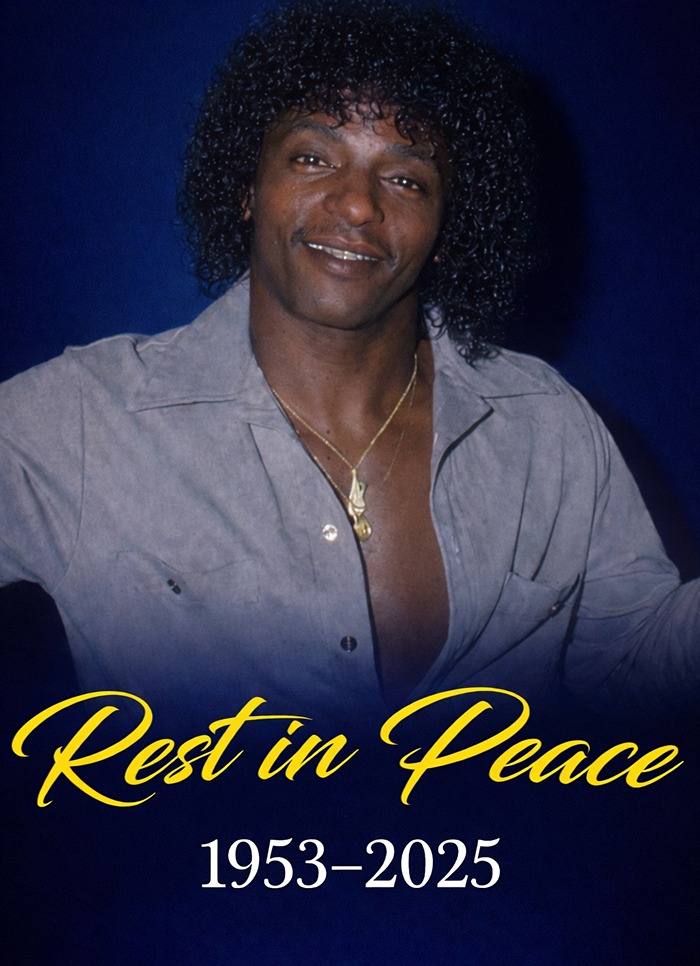
The rhythmic heartbeat of Detroit has produced many icons, but few possessed the sunshine-infused vocal agility of Carl Carlton. On December 14, 2025, the music world lost one of its most enduring bridges between the soulful foundations of Motown and the high-energy glitter of the disco era. At age 72, Carlton passed away, leaving behind a legacy defined by two of the most recognizable anthems in American pop history. His death, confirmed by his son, marks the end of a journey that began in the “Motor City” and touched nearly every corner of the R&B landscape.
Born Carlton Hudgens in Detroit, Michigan, his path was forged in the heat of a musical revolution. Entering the industry as a preteen under the moniker “Little Carl Carlton,” he was a prodigy of the mid-1960s soul circuit. His early releases, such as “Competition Ain’t Nothin’” and “I Can Feel It,” were characterized by a youthful, driving energy that encapsulated the optimistic sound of the era. While these tracks didn’t immediately dominate the domestic charts, they crossed the Atlantic to become foundational staples of the United Kingdom’s Northern Soul movement—a subculture that prized the rare, the fast-paced, and the passionately sung.
The Master of the Reinvented Classic
Carlton’s career was a masterclass in the art of the cover song. In 1974, he took a track originally popularized by Robert Knight and reimagined it for a new decade. His version of “Everlasting Love” was an explosion of orchestral soul, featuring a soaring string arrangement and a vocal performance that radiated pure, unadulterated joy. The track peaked at No. 6 on the Billboard Hot 100, becoming a definitive recording that continues to find life in film soundtracks and wedding receptions decades later.
What set Carlton apart was a vocal flexibility that drew frequent and favorable comparisons to Stevie Wonder. He possessed a light, athletic tenor that could navigate complex R&B runs with ease, yet he maintained a gritty soulfulness that kept his music grounded. After navigating the complexities of early recording contracts that often stifled young artists, Carlton found a new creative home with 20th Century Fox Records in the late 1970s, setting the stage for his second major ascent.
The “Bad Mama Jama” Phenomenon
As the 1980s dawned and the musical landscape shifted from disco to the sleeker, synth-heavy sounds of funk and urban contemporary, Carlton evolved once again. In 1981, he released what would become a global cultural touchstone: “She’s a Bad Mama Jama (She’s Built, She’s Stacked).” The song was an instant sensation, characterized by its infectious bassline and a celebratory lyricism that honored feminine confidence.
The track surged to No. 2 on the Billboard Soul chart and earned Carlton a Grammy nomination for Best R&B Vocal Performance, Male. It became a staple of the “Roller Disco” era and a heavily sampled favorite for the first generation of hip-hop producers. The song showcased his ability to adapt to the changing tides of production while keeping his classic Detroit soul sensibilities intact. He followed this success with a reggae-infused interpretation of the Four Tops’ “Baby I Need Your Loving,” further proving that his artistry was not confined by genre boundaries.
A Collaborative Giant and Live Performer
While his recording output became more sporadic in the 1990s and 2000s, Carl Carlton’s influence never waned. He was a “musician’s musician,” a respected peer who collaborated and shared stages with a virtual “Who’s Who” of R&B royalty. His credits and live performances saw him working alongside Smokey Robinson, Rick James, Teena Marie, Chaka Khan, and his vocal idol, Stevie Wonder. These collaborations were a testament to his versatility; he could harmonize with the smoothest balladeers or trade funk riffs with the heaviest hitters of the 80s groove scene.
In his later years, Carlton remained a vital presence on the live circuit, frequently appearing at soul festivals and “old school” revivals where his energy remained undiminished by age. He understood that his music was more than just a collection of hits; it was the soundtrack to the memories of a generation.
The Final Verse and a Lasting Echo
The final years of Carlton’s life were a testament to his personal resilience. After suffering a stroke in 2019, he faced a difficult road to recovery. However, even in the shadow of health challenges, his music remained a beacon of light for his fans. His passing in late 2025 has triggered a wave of tributes from across the industry, with fellow artists and historians noting his role in bridging the gap between the 60s soul groups and the 80s solo stars.
In the context of February 2026, as we look back on the losses that defined the previous year—including the heartbreaking passing of Gary Sinise’s son and the tragic domestic mysteries that often dominate the headlines—the story of Carl Carlton serves as a reminder of the unifying power of art. His music was designed to make people move, to make them feel seen, and to celebrate the “everlasting” nature of love and rhythm.
Carl Carlton didn’t just sing songs; he captured the frequency of a culture. Whether it was the raw, Northern Soul energy of his youth or the polished, funk-driven confidence of his maturity, he remained an authentic voice in an industry that often favors trend over talent. As “Everlasting Love” continues to play on airwaves around the world, Carl Carlton’s voice remains precisely where he always intended it to be: in the hearts and on the dance floors of the people. Rest in peace to a true architect of the American groove.