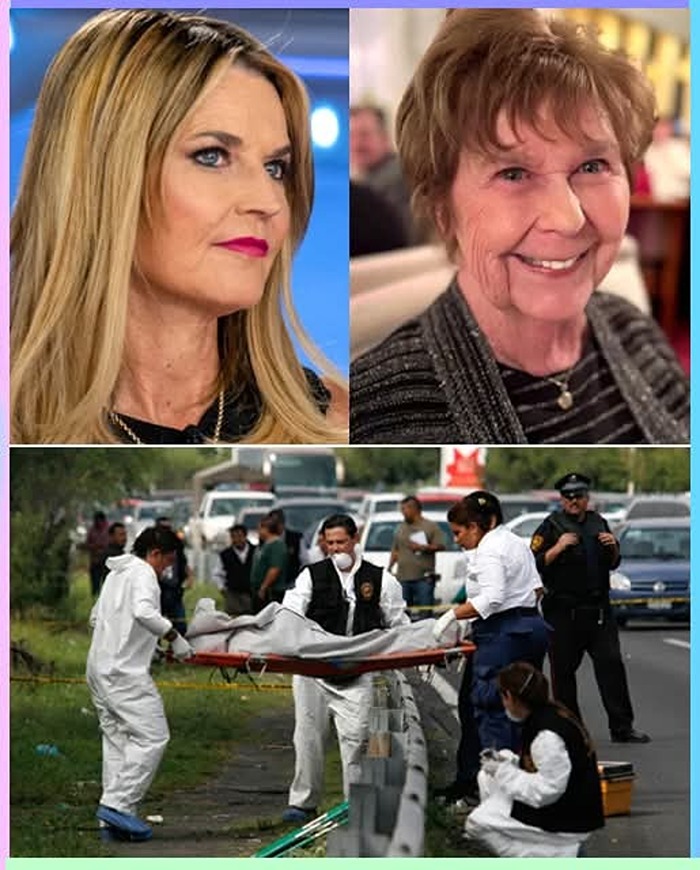
For over a decade, Savannah Guthrie has served as the nation’s morning anchor, a steady and compassionate voice navigating millions of viewers through the complexities of the modern world. From the heights of political transitions to the depths of global crises, her composure has been a hallmark of her journalistic integrity. However, in a tragic and surreal reversal of roles, Savannah has been forced to step away from the anchor desk. She is no longer the one reporting the news; she has become the heart of a story that is gripping the country in a collective state of shock and sorrow.
The search for Nancy Guthrie, Savannah’s 84-year-old mother, has escalated from a localized missing-person case into a complex federal criminal investigation. What began as a routine Silver Alert in a quiet, sun-drenched Arizona neighborhood has transformed into a nightmare of forensic tape, FBI briefings, and the agonizing silence of a trail gone cold. For Savannah and her family, the transition from hopeful searching to the grim reality of a suspected abduction has been a journey through a darkness no child is ever prepared to face.
When Nancy first vanished from her residence, the initial working theory was one of tragic but common elder disorientation. Authorities and volunteers scoured the desert washes and suburban streets of her community, operating under the assumption that a medical emergency or a sudden bout of confusion had led her away from home. Families across the nation who care for aging parents watched with bated breath, seeing their own fears reflected in the Guthrie family’s plight. But as days bled into weeks without a single sighting, a digital footprint, or a shred of physical evidence suggesting Nancy had simply wandered off, the narrative began to shift.
The silence from the Arizona desert became deafening, and the logistics of a voluntary disappearance grew increasingly impossible to justify. On February 4, the shift in tone became official. The Pima County Sheriff’s Department, in coordination with federal partners, transitioned the investigation. Nancy’s home, once a place of warmth and family gatherings, was formally reclassified as a crime scene. Senior officials confirmed what the family had dreaded: the evidence no longer supported the theory of a wandering senior. “She didn’t just walk out,” a police spokesperson stated, signaling the end of the search for a lost woman and the beginning of a hunt for a criminal.
Standing before the public not as a seasoned NBC journalist, but as a devastated daughter, Savannah addressed the nation with a vulnerability that moved millions. “I wasn’t ready for this,” she admitted, her voice thick with the weight of unprocessed grief. “You hold onto hope as long as you possibly can… even when it feels like it’s slipping away.” Her words resonated across social media platforms, transforming a private tragedy into a national vigil. Behind the scenes, the involvement of the FBI underscored the severity of the situation. Kidnapping, once a distant and unthinkable horror, was now the primary focus of the investigation.
Law enforcement sources have since revealed that the reclassification was driven by a confluence of forensic findings. Newly uncovered surveillance footage from neighboring properties and data retrieved from local networks suggested that Nancy did not leave her home willingly. There were signs of calculated planning—intentional disruptions to security protocols and a timeline that suggested the perpetrator had intimate knowledge of Nancy’s routines. “This situation is a nightmare,” one senior official noted during an off-the-record briefing. “The evidence points toward foul play, with signs of planning and criminal intent. Kidnapping is now a strong possibility.”
The shift in the investigation has moved federal agents across state lines, as they reconstruct Nancy’s final known movements and analyze suspicious activity reported in the vicinity on the night of January 31. The language of the authorities has undergone a chilling evolution; they are no longer speaking solely of a recovery mission, but of accountability and the pursuit of justice. For those who know Savannah, the sight of her enduring such a profound personal violation is heartbreaking. Colleagues at the Today show have described her as the “emotional backbone” of their team, a woman whose strength has supported them through their own struggles, now navigating a sea of unanswered questions.
As the forensic teams continue to meticulously process the Guthrie home and digital analysts comb through gigabytes of metadata, the case has reignited a national conversation about the safety of the elderly. It has exposed the terrifying vulnerability of seniors living in quiet, seemingly secure communities and the sophisticated methods used by those who would exploit that vulnerability. The outpouring of support for the Guthrie family has been a testament to the connection Savannah has built with her audience over the years, a bridge of trust that now carries the weight of a nation’s prayers.
Despite the grim classification of the case, a fragile, unyielding hope still flickers in the darkness. The determination of the FBI and local law enforcement remains absolute, with agents working around the clock to identify any anomaly that could lead to a breakthrough. The story of Nancy Guthrie has become a haunting reminder of the fragility of safety and the unbreakable bonds of family. It is a narrative of a daughter’s love pitted against a cold, criminal act, and the unbearable weight of the unknown.
As night falls over the Arizona desert, the physical search continues in tandem with the digital one. The nightmare is far from over, but the resolve to uncover the truth has never been stronger. Savannah Guthrie, a woman who has spent her life seeking the truth for others, now finds herself waiting for a single truth that will bring her mother home. For now, she waits in the quiet moments between the headlines, holding tightly to the memories of her mother’s warmth and the steadfast belief that light will eventually find its way into the darkest corners of this investigation.