The first night in my friend’s guest room, the irritation was a mere whisper. It was a single, solitary bump on my left forearm—small, pale, and easily dismissed as the byproduct of a stray mosquito or perhaps the physical manifestation of a long day’s travel. I brushed it off with the casual indifference of someone who believes their environment is under their control. But as the clock ticked toward the early hours of the second morning, that whisper turned into a low, rhythmic hum of discomfort.
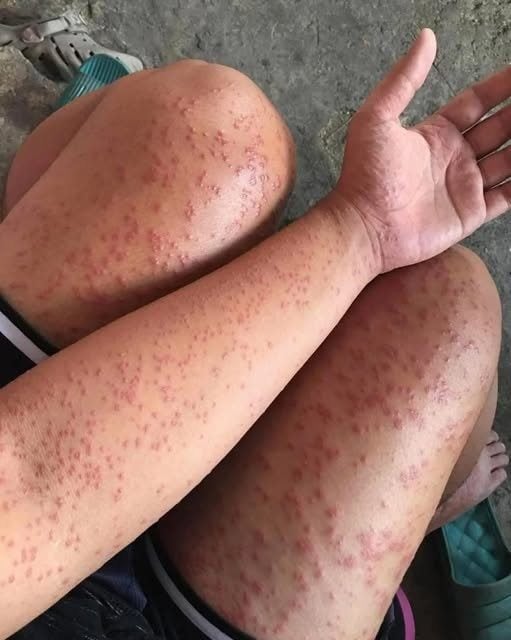
The patterns began to emerge with a clinical, terrifying precision. They weren’t scattered randomly across my body like the haphazard bites of a common insect. Instead, they appeared in deliberate clusters, tracing the geography of my skin where it had pressed most firmly against the mattress: the curve of my shoulder, the small of my back, the underside of my thighs. Each bump was a tiny, raised welt, itching with a quiet persistence that felt less like a physical symptom and more like a signal. I lay there in the velvet darkness of the apartment, scratching absentmindedly, trying to convince myself that I was overreacting. My mind wanted to believe it was nothing, but my body was already screaming the truth.
Context is a heavy thing, and in an apartment like this, the context felt suffocating. My friend’s place was an architectural relic, one of those pre-war builds that possessed a “charming” aesthetic—a euphemism for high ceilings, warped floorboards, and thick, leaden layers of paint. It was a space full of soft shadows and creaks that sounded like footsteps. It had a smell, too—not a bad one, but an old one, a scent of dust, floor wax, and the accumulated breath of a century’s worth of tenants. As I lay awake on that second night, the itch became inseparable from the atmosphere. The apartment felt like it was watching me, its history pressing into my skin. Old places carry layers of life you can’t see, and as I traced the line of welts along my arm, I realized that I wasn’t nearly as alone in that room as I had initially assumed.
I performed a mental audit of my habits, searching for a logical escape hatch. I hadn’t switched detergents; I wasn’t using a new soap or cologne. My diet hadn’t shifted, and I hadn’t been hiking through tall grass or handling strange chemicals. Everything in my personal routine was a constant. The only variable was the room. The only thing that had changed was the air I was breathing and the surface upon which I slept. This realization made the itching feel heavier, more intentional. It wasn’t an allergy; it was an interaction.
By the third night, the psychological toll began to outweigh the physical irritation. The mind, when deprived of sleep and plagued by an invisible assailant, becomes a breeding ground for the grotesque. I began to visualize the microscopic ecosystem that was likely thriving just inches beneath me. I thought of bed bugs—the ultimate domestic nightmare—tucked deep into the black, hidden seams of the mattress, waiting for the carbon dioxide of my breath to signal that the feast had begun. I imagined fleas, dormant for years in the deep fibers of the wall-to-wall carpeting, suddenly reanimated by the warmth of a new host.
I thought of dust mites, millions of them, thriving in a pillow that had likely absorbed decades of sweat, saliva, and dead skin cells. I imagined mold spores, invisible and light as air, drifting through the ventilation system and settling into my pores. I even thought about the chemical ghosts of the past—residues of harsh industrial cleaners from the 1970s or nicotine stains from a tenant long since gone, all of them clinging to the fabric and reacting with my own biology. Some of the bumps on my skin faded quickly into dull aches, while others pulsed with an angry, white-hot heat when I dared to scratch them. I wondered if my immune system had recognized the danger long before my brain was willing to accept the reality of the situation.
The psychological weight of an “unclean” space is a specific kind of horror. It’s a violation of the one place where a human is supposed to be most vulnerable and safe: the bed. To have that sanctuary compromised by something unseen is to lose your footing in the world. I felt like a trespasser in a space that was already occupied by things that didn’t want me there. The apartment wasn’t just old; it was active.
When the sun finally rose on the third morning, the light brought a cold, hard clarity. I didn’t wait for coffee. I didn’t check my phone. I went straight for the bed. I stripped the sheets back with a violent sort of urgency, exposing the naked mattress to the harsh morning light. I inspected every inch of it, looking for the tell-tale rust-colored spots or the tiny, translucent husks of insects. I checked the corners of the wooden bed frame, the dark folds of the curtains, and the gaps behind the baseboards. I was looking for a villain I could see, but the room remained stubbornly opaque. It kept its secrets.
I didn’t need to find a physical insect to know I had to leave. The evidence was written on my skin in a language of welts and inflammation. I packed my bags, moving with a frantic energy, and took everything I owned to a local laundromat. I washed every scrap of clothing, my towels, and even my duffel bag on the hottest setting the machines allowed, watching the water churn through the glass doors as if it were an exorcism.
Afterward, I retreated to a neutral space and stood under a shower for a long time. I let the water—hotter than was comfortable—scald the irritation. I felt a profound, visceral relief as the steam filled the room, a sense that I was finally rinsing the apartment off myself. I was washing away the history of a stranger’s home, the microscopic hitchhikers, and the lingering dread of the unseen.
Over the next several days, the bumps began to retreat. The redness faded to a dull pink, and the maddening itch finally went silent. But the lesson stayed behind, etched into my memory as clearly as the welts had been etched into my shoulders. Skin reacts for a reason. Discomfort is rarely just a coincidence; it is a delivery system for information. We like to think of our homes and our resting places as sterile, controlled environments, but we are always in conversation with our surroundings.
Unfamiliar spaces carry invisible histories, and sometimes, our bodies are more perceptive than our minds. We are biological sensors, constantly scanning for threats that our eyes are too coarse to see. When your skin starts speaking to you in clusters and welts, it isn’t just an annoyance—it’s a warning. It’s a reminder that a place isn’t always as harmless as it looks, and that some stories are better left unread, and some beds are better left unslept in. I learned that the hard way, through the quiet, stinging language of the skin.