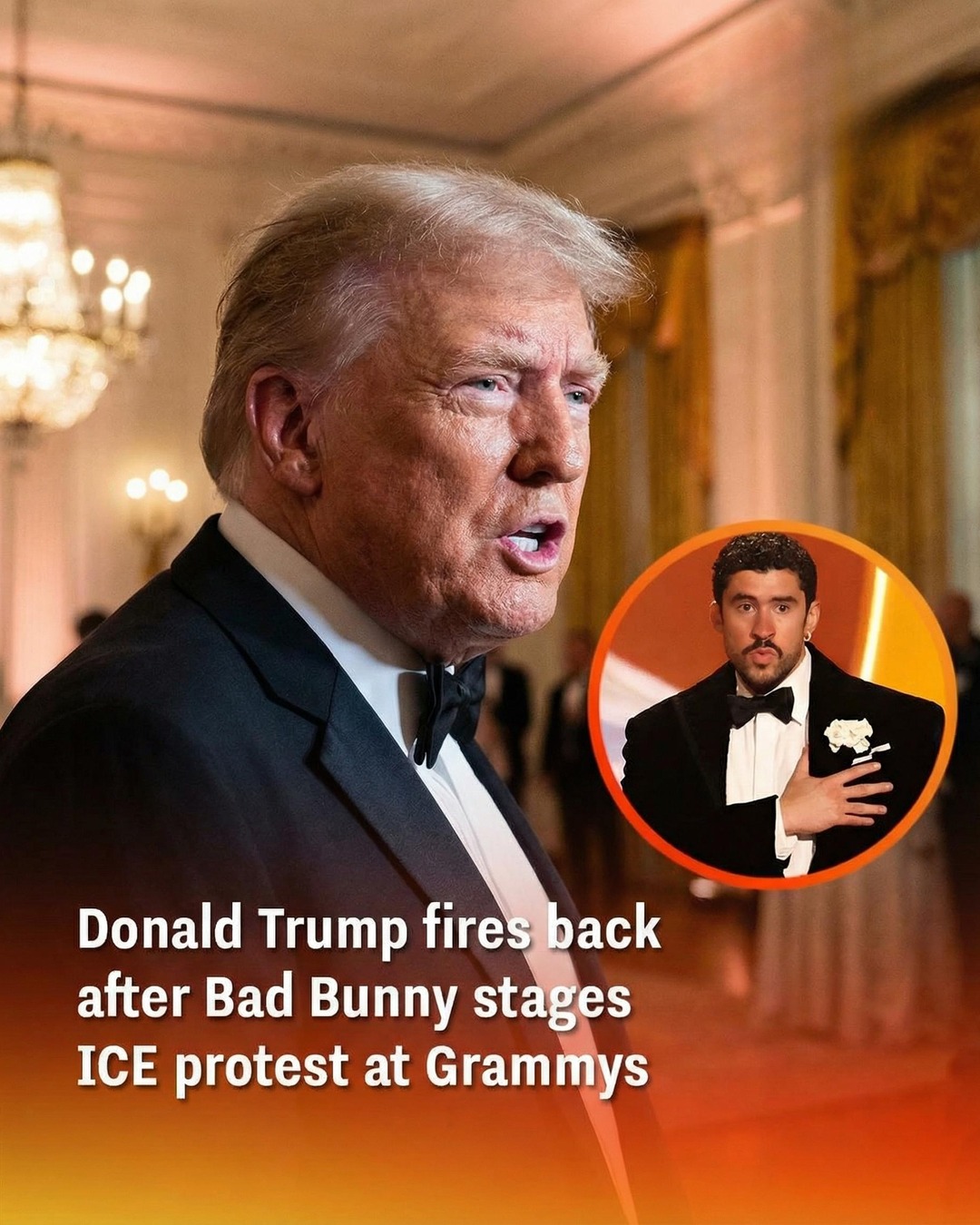
The intersection of cultural stardom and national policy reached a fever pitch this week as the 2026 Grammy Awards transformed from a musical showcase into a high-stakes arena for social discourse. Held in the heart of Los Angeles, the ceremony was marked by a series of emotionally charged acceptance speeches that moved beyond the traditional gratitude for producers and fans, focusing instead on the human impact of current immigration policies. The night was punctuated by a historic win for Puerto Rican global icon Bad Bunny, whose presence and words served as the evening’s moral compass. As he accepted one of the night’s most prestigious honors, he veered away from self-congratulation, choosing instead to deliver a poignant plea for unity, empathy, and a more compassionate approach to the marginalized communities currently caught in the crosshairs of federal enforcement.
Bad Bunny’s message, delivered with a mix of raw vulnerability and defiance, ignited a firestorm of activity across social media and caught the immediate attention of the political establishment. However, the most vocal critic of the night’s proceedings was President Donald Trump. Reacting with his characteristic brand of swift and pointed rhetoric, Trump expressed deep dissatisfaction with the ceremony, characterizing the evening not as a celebration of art, but as a partisan platform for what he described as “leftist grievances.” In a series of public statements, the former President lamented the “death of entertainment,” arguing that award shows have alienated the general public by prioritizing political posturing over musical merit.
The friction intensified when Trump shifted his focus toward the evening’s host, Trevor Noah. Known for his sharp satirical edge, Noah had woven several jokes into the broadcast that referenced Trump’s ongoing legal battles and his public stance on various national security issues. The former President did not take the humor lightly. In a formal rebuttal, Trump denied the factual basis of Noah’s comedic segments and revealed that his legal team was exploring the possibility of a defamation lawsuit. He characterized the host’s commentary as a deliberate attempt to mislead the public and damage his reputation under the guise of comedy. This escalating feud between the world of late-night satire and the upper echelons of political power has once again highlighted the increasingly blurred lines between entertainment and governance in the American consciousness.
As the dust begins to settle from the Grammys, the national conversation has pivoted toward the next major cultural milestone: the Super Bowl. In a move that has sparked intense debate, government officials have confirmed that Immigration and Customs Enforcement (ICE) will have a heightened and visible presence at the stadium. This decision has become a focal point of controversy, particularly because Bad Bunny—fresh off his politically charged Grammy win—is slated to headline the halftime show. Supporters of the move, including various government spokespeople, maintain that the inclusion of federal agents is a standard component of “Level 1” national security events. They argue that in an era of complex global threats, the priority must be absolute public safety and that lawful attendees have no reason to feel intimidated by the presence of law enforcement.
Conversely, civil rights advocates and various artistic collectives have voiced significant concern over the optics of such a decision. Critics argue that deploying immigration enforcement to a major sporting and musical event creates a “chilling effect” on the atmosphere of celebration. They suggest that the timing, coming so soon after the Grammy-based critiques of immigration policy, feels less like a security measure and more like a tactical display of federal authority. The concern is that the stadium, traditionally a place of escape and communal joy, is being transformed into a site of surveillance that could alienate a large segment of the audience and the performers themselves.
This unfolding saga serves as a definitive case study in how cultural events in 2026 have evolved into mirrors for the nation’s deepest divisions. The Grammy Awards and the upcoming Super Bowl are no longer isolated spectacles of talent; they are battlegrounds for the definition of American identity. On one side of the debate are those who champion the “artist-citizen,” believing that those with a massive public platform have a moral obligation to speak on behalf of the voiceless. From this perspective, music and sports are the most effective vehicles for social change because they reach a broader, more diverse audience than traditional political speeches or news broadcasts.
On the other side are those who advocate for the “sanctity of the stage.” This group argues that the constant infusion of heavy social themes into entertainment is a form of cultural exhaustion. They believe that the primary role of an artist is to provide a reprieve from the stresses of daily life, and that the “politicization of everything” is driving a wedge between performers and the fans who may not share their specific ideological views. To these critics, the response from figures like Donald Trump is a necessary pushback against what they perceive as an echo chamber of Hollywood elites who are out of touch with the concerns of everyday citizens.
As the countdown to the Super Bowl halftime show begins, the world is watching to see how Bad Bunny will navigate this delicate landscape. Will he use the world’s most-watched stage to further his message of empathy, or will the looming presence of federal authorities alter the tone of his performance? The answer will likely dictate the tenor of the national debate for the remainder of the year. What is certain is that the era of “pure” entertainment has passed. Whether on a red carpet in Los Angeles or on the fifty-yard line of a championship stadium, the performance is now inseparable from the policy. The songs are being sung, but the lyrics are increasingly being written in the halls of power and the streets of the community. In this new reality, every note played is a statement, and every reaction—whether a standing ovation or a legal threat—is a reminder that the world’s stage is now the most contested territory in the country.