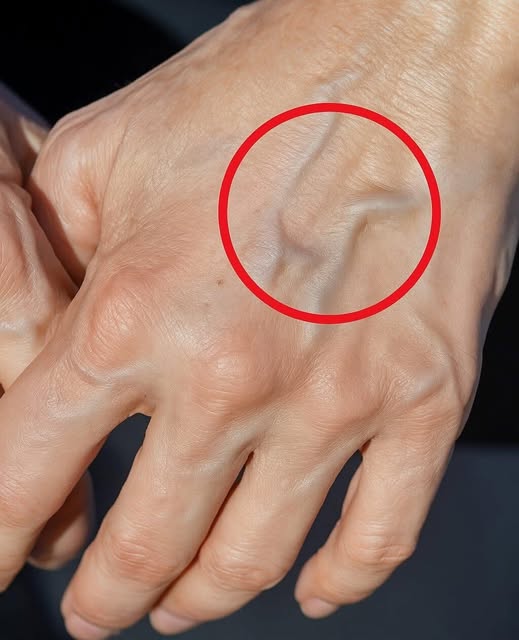
The human body is an intricate map of biological processes, and few features are as visually arresting as the sudden emergence of prominent veins. You might be washing your hands, lifting weights at the gym, or simply relaxing on a warm afternoon when you notice them—blue, green, or purple lines tracing paths across your forearms, the backs of your hands, or your calves. For many, this observation is accompanied by a flicker of anxiety. Is this a sign of peak physical conditioning, a natural consequence of the passing years, or a silent alarm from the circulatory system? Understanding what your veins are telling you requires a deeper look into the mechanics of how blood moves through your body and the external factors that influence its visibility.
Veins serve as the dedicated return paths of the circulatory system, tasked with the vital job of carrying oxygen-depleted blood back toward the heart. Unlike arteries, which are thick-walled and buried deep within the musculature to withstand the high pressure of blood being pumped from the heart, veins are thinner and located much closer to the surface of the skin. Because they operate under lower pressure, their size and prominence are highly susceptible to changes in the body’s internal environment and the external world.
In many instances, visible veins are a completely normal, and even healthy, anatomical variation. One of the most common reasons for “vascularity”—the term often used by fitness enthusiasts—is low body fat. Fat acts as an insulating layer of padding between the skin and the underlying structures. When a person has a low body fat percentage, whether through rigorous athletic training or a naturally lean constitution, the “cushion” disappears, allowing the veins to press directly against the underside of the skin. This is why bodybuilders and endurance athletes often possess highly defined veins; it is a visual marker of their lack of subcutaneous fat and their high muscle-to-fat ratio.
Aging also plays a primary role in this transformation. As we move through the decades, our skin undergoes structural changes, losing the collagen and elastin that once provided thickness and bounce. Simultaneously, the layer of fat that naturally sits beneath the skin begins to thin. This thinning of the dermis and the loss of underlying tissue essentially turn the skin into a translucent veil, making the underlying vascular network appear much more distinct than it was in youth. In this context, prominent veins are rarely a medical concern but rather a natural milestone of the body’s aging process.
Environmental factors and temporary physiological states can also cause veins to “pop.” During a strenuous workout, your muscles require a massive influx of blood to provide oxygen and nutrients. To accommodate this, the veins dilate, or expand, to handle the increased return flow. Similarly, on a hot summer day, the body uses its veins as a cooling mechanism. Through a process called vasodilation, veins near the skin’s surface expand to release heat into the air, helping to regulate internal body temperature. Even hormonal shifts—such as those experienced during pregnancy, menstruation, or menopause—can influence the volume and pressure of blood, leading to more noticeable veins.
However, there is a threshold where visibility shifts from a benign characteristic to a clinical symptom. While many veins are simply “visible,” others are “distended” or “bulging,” which can indicate that the circulatory system is struggling. One of the most prevalent conditions is Chronic Venous Insufficiency (CVI). This occurs when the tiny, one-way valves inside the veins—which prevent blood from flowing backward due to gravity—become weakened or damaged. When these valves fail, blood pools in the lower extremities rather than moving efficiently toward the heart. This pooling creates pressure that causes the veins to stretch, twist, and bulge, often resulting in what we recognize as varicose veins.
Varicose veins are more than just a cosmetic frustration. They can be accompanied by a persistent heavy or aching sensation in the legs, swelling in the ankles, and skin changes like itching or discoloration. If left unmanaged, CVI can lead to more serious complications, such as venous ulcers. Another condition to be aware of is superficial thrombophlebitis, where a small blood clot forms in a vein near the surface. This typically manifests as a firm, cord-like vein that is red, tender, and warm to the touch. While usually not life-threatening, it requires medical oversight to ensure the inflammation resolves.
The most critical warning sign, however, involves the deep veins of the body. Deep Vein Thrombosis (DVT) is a serious condition where a blood clot forms in a major vein deep within the leg or arm. Unlike the superficial veins we can see, DVT is an internal “silent” threat, though its symptoms are often unmistakable. If you experience sudden, significant swelling in one limb accompanied by cramping, intense pain, and a feeling of heat in the affected area, it is a medical emergency. If a piece of that clot breaks off and travels to the lungs, it can cause a pulmonary embolism, which is potentially fatal. Therefore, knowing the difference between a vein that is merely “visible” and one that is part of a painful, swollen, or discolored limb is life-saving knowledge.
For most people, managing vein health is a matter of proactive lifestyle choices. Staying hydrated is essential, as dehydration causes blood to thicken, making it harder for veins to move it efficiently. Regular movement is equally vital; the “calf pump” action of walking helps squeeze blood upward against gravity, preventing the pooling associated with CVI. If your job requires long hours of standing or sitting, taking frequent breaks to stretch or using compression stockings can provide the external support your veins need to maintain healthy flow.
Ultimately, your veins are a fascinating window into your body’s internal workings. For the athlete, they are a badge of discipline; for the elderly, a mark of life’s progression. But they are also a diagnostic tool. By paying attention to changes—specifically looking for pain, warmth, or sudden texture changes like hardening—you can act as an informed guardian of your own health. While a prominent vein is usually nothing more than an anatomical quirk, being mindful of the signals they send ensures that your circulatory system remains a robust highway of health for years to come.