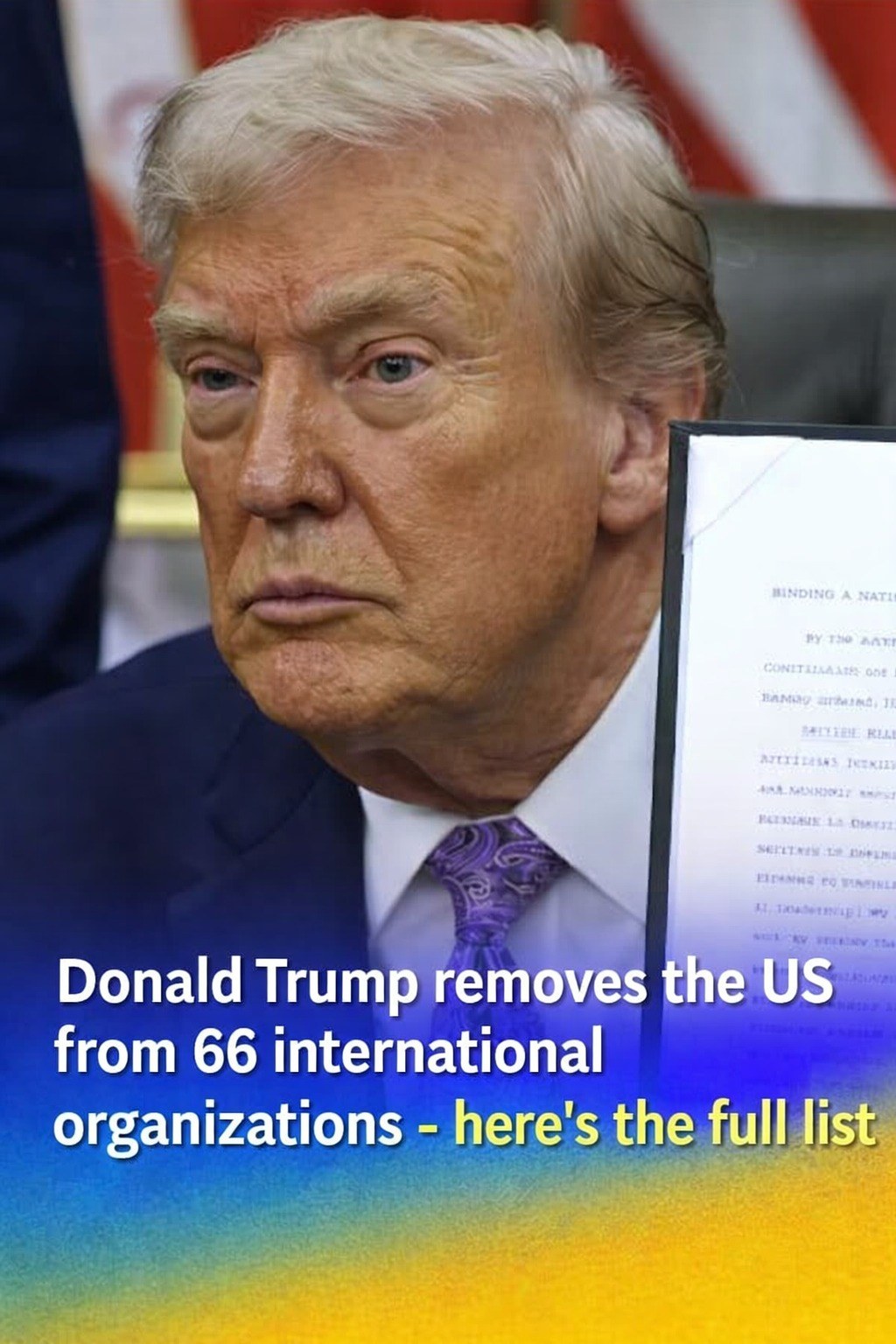
The United States is currently navigating one of the most significant pivots in its foreign policy history. Under the direction of President Donald Trump, the federal government has initiated an expansive withdrawal from dozens of international organizations, signaling a fundamental shift away from the multilateralism that has defined American diplomacy since the end of World War II. This strategic retreat, detailed in a comprehensive White House memorandum, involves cutting formal ties with 31 United Nations-affiliated bodies and 35 non-UN international organizations. The scale of this move is unprecedented, marking a definitive transition toward an “America First” posture that prioritizes national sovereignty, fiscal domesticity, and bilateral negotiations over collective global governance.
The administration’s rationale for this sweeping exit is rooted in the belief that many modern international institutions have drifted away from their original purposes. According to senior officials, several of these organizations now serve as platforms for globalist agendas that often run counter to American interests. The administration argues that many of these bodies promote ideological programs or climate-related mandates that restrict American economic growth and infringe upon the nation’s right to self-determination. By withdrawing from these entities, the White House intends to reclaim billions of dollars in taxpayer funding. This capital is slated for redirection toward urgent domestic priorities, including the modernization of national infrastructure, the stabilization of the healthcare system, and the creation of economic support programs designed to benefit the American worker directly.
Among the most high-profile targets of this policy are agencies within the United Nations framework. UN Women, an organization dedicated to gender equality and the empowerment of women globally, is set to lose U.S. participation and funding. For decades, the United States served as a primary financier for its development aid and advocacy programs. Similarly, the United States is severing ties with the United Nations Population Fund (UNFPA). The relationship with UNFPA has long been a flashpoint in American politics due to debates over reproductive health and family planning. The administration has cited deep-seated ideological differences as a primary reason for this specific departure, arguing that American resources should not support programs that conflict with the administration’s moral and policy frameworks.
The reach of this policy extends far beyond humanitarian and social agencies. The 35 non-UN organizations targeted for withdrawal cover a vast spectrum of global activity, including international trade, energy policy, arms monitoring, peacebuilding efforts, and development finance. By exiting these groups, the United States is essentially resigning its seat at various tables where global standards and regulations are debated. The administration maintains that these organizations often impose “soft law” or regulatory burdens that hinder American competitiveness. The goal is to replace these multilateral constraints with a flexible, bilateral approach to foreign relations, where the United States can negotiate one-on-one with other nations to secure more favorable terms.
However, the implementation of such a massive withdrawal faces significant legal and logistical hurdles. The White House memo acknowledges that these exits will occur “to the extent permitted by law,” recognizing that the Executive Branch does not have unlimited power to unilaterally dissolve all international commitments. Many U.S. memberships are the result of treaties ratified by the Senate or are maintained through specific funding allocations mandated by Congress. While the President has broad authority over foreign affairs, legal scholars and lawmakers are expected to scrutinize the process to ensure it adheres to constitutional boundaries. Despite these potential legal challenges, the administration remains firm in its intent to exercise executive authority to the fullest extent possible to protect what it deems the “national interest.”
This current wave of withdrawals is a massive expansion of the “sovereignty-first” philosophy seen during Trump’s previous term. It builds upon the earlier exits from the Paris Climate Agreement and the initial steps taken to leave the World Health Organization (WHO). In those instances, the administration argued that the costs of participation were disproportionately high and that the institutions themselves were plagued by systemic bias. By applying this logic to over 60 additional organizations, the administration is effectively attempting to dismantle the infrastructure of globalism as it has existed for nearly a century.
The economic implications of this shift are a point of intense debate. Proponents of the withdrawal argue that exiting multilateral trade bodies provides the United States with greater leverage. They believe that by operating outside of restrictive collective rules, the U.S. can use its massive economic weight to extract better deals from individual trading partners. Critics, however, warn that this isolation could backfire. They argue that by leaving these organizations, the U.S. loses its ability to shape the rules of the global road. Without American leadership in these forums, other global powers—most notably China—may step in to fill the vacuum, establishing international standards that favor their own industries at the expense of American businesses.
Environmental and humanitarian concerns are equally prominent. The withdrawal from climate-focused agencies means the United States will no longer officially participate in the monitoring of global emissions or the coordination of international reduction efforts. While the administration views these agreements as “costly mandates” that stifle the domestic energy sector, environmental advocates argue that the lack of U.S. involvement will cripple global efforts to combat climate change. On the humanitarian front, agencies like the United Nations High Commissioner for Refugees (UNHCR) and the United Nations Development Programme (UNDP) stand to lose their most influential partner. Critics of the policy suggest that a reduction in U.S. coordination could lead to chaos in disaster response and refugee management, potentially creating regional instabilities that will eventually require American intervention anyway.
The international response to this news has been largely one of alarm. Long-standing allies in Europe and Asia have expressed concern that a “disengaged” America makes the world less predictable and more dangerous. There is a growing fear among diplomatic circles that the U.S. is surrendering its role as the “indispensable nation,” leaving a fragmented global order where collective problems—such as pandemics, financial instability, and regional conflicts—become much harder to solve.
Domestically, the reaction is polarized along familiar lines. Supporters view the decision as a courageous defense of the American taxpayer and a necessary correction to decades of “globalist overreach.” They see it as a fulfillment of a promise to put American needs above the demands of foreign bureaucrats. Conversely, detractors see it as a strategic blunder that will diminish American prestige and influence for generations to come. They argue that leadership is not just about power, but about the ability to convene and lead the international community toward shared goals.
As the United States begins the formal process of untangling itself from these 66 organizations, the long-term effects remain to be seen. The administration has left the door slightly ajar for “selective re-engagement” should a specific strategic interest arise, but the overall trajectory is clear. This policy represents a historic gamble: the belief that the United States is strong enough to thrive in an interconnected world by acting alone. Whether this move leads to a more prosperous and sovereign America, or results in a period of global instability and diminished American influence, is a question that will define the coming decade of international relations. For now, the world is watching as the United States recalibrates its identity and its role on the global stage, moving away from the center of the multilateral world it helped create.