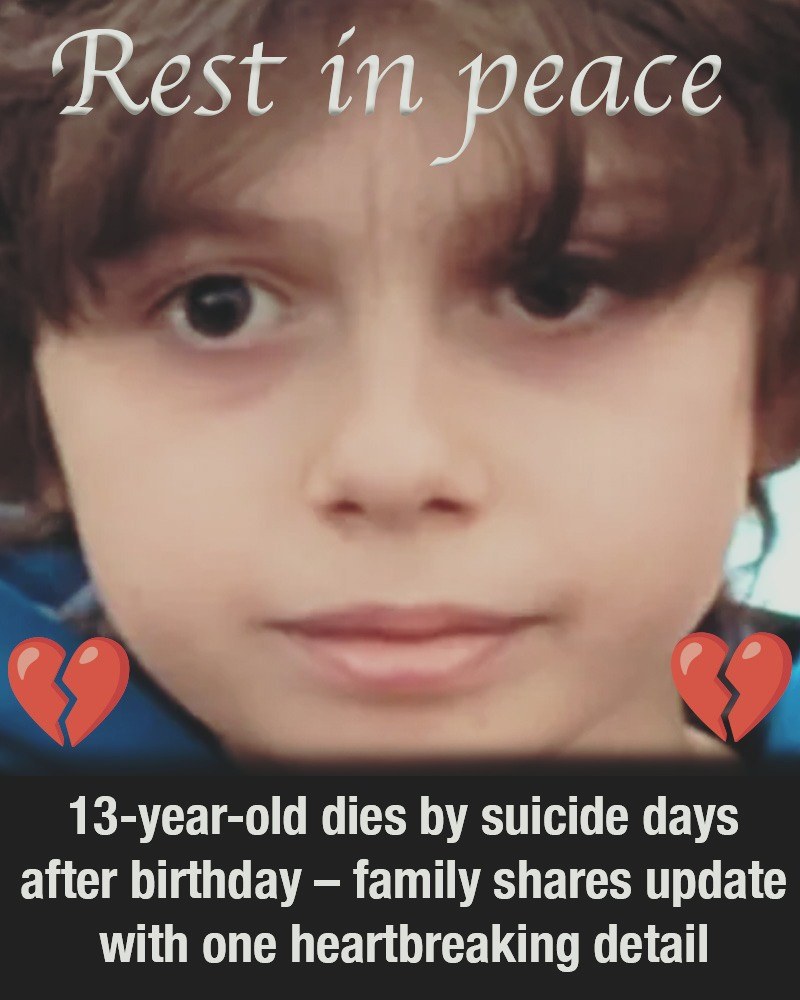
The tragic passing of 13-year-old Josiah Michael Dwinell has left his family and community grappling with a profound sense of grief and a series of haunting questions regarding the systemic failure to protect him.
Josiah had celebrated his 13th birthday on March 4, yet just eight days later, his life ended abruptly. This narrow window between a milestone celebration and an absolute tragedy has cast a harsh light on the critical need for mental health intervention. According to his relatives, the months leading up to his death were marked by persistent bullying and emotional decline. His aunt, Shaena Stebbins, expressed the family’s deep-seated frustration, noting that while Josiah’s struggles were painfully evident at home, no external figures—at school or on the bus—stepped in to assist him.
Josiah was no stranger to hardship. Having lost his biological mother over five years ago, he was raised by his grandmother, who served as his primary source of stability and his fiercest advocate. Despite her constant presence and numerous attempts to navigate the mental health and school support systems, the family felt that Josiah’s distress was frequently minimized or dismissed. Stebbins recalled how Josiah’s “Mimi” stayed by his side through hospital visits, only to have his cries for help overlooked. Often, his genuine emotional pain was misinterpreted as mere attention-seeking, a common and dangerous misjudgment that can prevent children in crisis from receiving life-saving care.
The role of bullying in this tragedy cannot be overstated. His family believes the relentless harassment he endured during school hours and on his daily bus rides became an insurmountable burden. Stebbins noted that it was after one particularly difficult bus ride home that Josiah decided he could no longer handle the abuse.
In the wake of this loss, his loved ones are determined to remember Josiah for the person he was—a “light and joy” to his siblings, parents, and extended family. His death has sparked a broader conversation about the collective responsibility of schools and communities to respond to bullying with effective, proactive strategies rather than passive observation.
Mental health struggles in children are often subtle and easily masked. This tragedy highlights how children may use indirect communication or display behaviors that adults mistakenly ignore. In Josiah’s case, the repeated efforts by his family to secure professional support were met with institutional barriers, reflecting a societal trend where the emotional needs of young people are not always treated with the necessary urgency.
Preventing such outcomes is not about assigning blame but about identifying the intersections where intervention could have changed a life. It requires a societal shift toward better mental health education, accessible resources, and a commitment to taking every child’s expression of distress seriously.
For those currently struggling, it is vital to remember that help is always available. In the United States, individuals can reach the 988 Suicide & Crisis Lifeline by calling or texting 988, or use the Crisis Text Line by texting MHA to 741741.
Ultimately, honoring the memory of Josiah Michael Dwinell means advocating for a world where vulnerability is met with immediate empathy and action. It is a reminder that the responsibility to protect children is a shared one, requiring families, educators, and healthcare providers to listen more closely and act more decisively before a child feels their pain has become invisible.