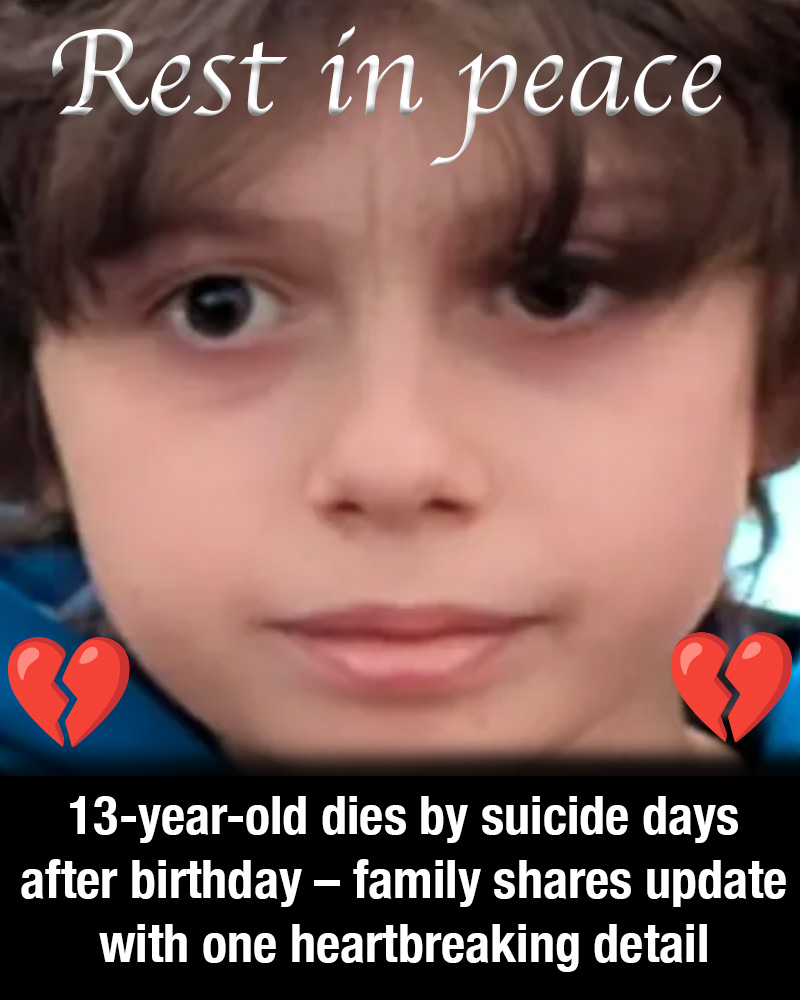
The death of 13-year-old Josiah Michael Dwinell has left his family — and the community around them — facing overwhelming grief, difficult questions, and a painful feeling that more could have been done.
Josiah had just celebrated his 13th birthday on March 4. Only eight days later, his life ended in a way that deeply shocked those who knew him. For his loved ones, the timeline is impossible to separate from the concerns they say had been raised long before the tragedy.
Concerns Raised Before His Death
According to relatives, Josiah had been struggling with bullying and mental health challenges in the months leading up to his passing. His aunt, Shaena Stebbins, described a young boy who showed clear signs of distress at home — even if those struggles were not always recognized elsewhere.
“He was being bullied at school and on the bus… not one person outside his home tried to help him,” she wrote.
Family members say the situation had been worsening over time, leaving Josiah increasingly overwhelmed.
A Childhood Already Marked by Loss
Josiah’s life had already been touched by hardship. His biological mother died more than five years ago, after which he began living with his grandmother, whom he was very close to.
Relatives say she was a constant source of support and care, doing everything she could to help him through difficult periods.
There were hospital visits, conversations about his emotional wellbeing, and repeated attempts to seek help.
But according to the family, those efforts were not always taken seriously.
“His Mimi sat by his side… trying to get him the help he was seeking, and his mental health was overlooked,” Stebbins shared.
Instead, they say some of his behavior was dismissed as attention-seeking rather than a sign of deeper distress.
When Warning Signs Are Missed
Situations like this highlight how important it is to recognize the difference between behavior and the message behind it.
What may appear outwardly as acting out can sometimes be a signal that a child is struggling and needs support, patience, and intervention.
Josiah’s family believes the ongoing bullying eventually became too much for him to handle.
“My nephew decided after a bus ride home that he couldn’t handle the bullying anymore.”
Those words reflect not only heartbreak but also a broader question: how many warning signs must appear before action follows?
Remembering the Person Behind the Pain
In the days since his passing, those who loved Josiah have spoken about who he was beyond the struggles he faced.
They describe a young boy who brought joy, laughter, and light to the people around him.
“He was an amazing brother, son, nephew… Josiah brought light and joy to our lives,” his family wrote while organizing support to help cover medical and funeral costs.
A Conversation That Extends Beyond One Family
When tragedies like this occur, grief rarely stays within one household. It spreads into schools, communities, and broader conversations about responsibility and awareness.
Bullying in school environments has long been recognized as a serious issue. Yet every new case raises difficult questions about how it is addressed — and sometimes about how warning signs are overlooked.
Another layer often emerges as well: how mental health struggles in children and teenagers are interpreted.
Signs of distress can be subtle or misunderstood. They do not always appear in ways adults expect. And when those signals are dismissed — even unintentionally — the consequences can be devastating.
Understanding the Complexity
It is also important to approach stories like Josiah’s with care.
Tragedies involving young people rarely have a single cause. Bullying, mental health challenges, personal history, and support systems often intersect in complicated ways.
Recognizing those connections is not about assigning blame to one place — it is about understanding where intervention might have made a difference.
A Painful Reminder
What remains above everything else is a profound sense of loss.
A boy who had only just entered his teenage years.
A family now facing absence where there once was presence.
Questions that may never be fully answered.
And a reminder that when concerns are raised — especially repeatedly — they deserve attention.
A Message Beyond the Tragedy
There is also a quieter lesson beneath stories like this.
Pay attention.
Take concerns seriously, even when they seem small.
Listen without immediately dismissing what someone is trying to say.
When a young person is struggling, the response they receive in that moment can matter more than anyone realizes.
If you or someone you know is struggling, support is available. In the United States, help can be reached through the 988 Suicide & Crisis Lifeline (call or text 988) or the Crisis Text Line (text MHA to 741741). Emergency services are also available if immediate help is needed.
Because sometimes the most important intervention is simply not overlooking what is right in front of us.